I've tried to become a morning person four times. Each attempt followed the same arc.
Day one: alarm at 6 AM. Genuinely awake. Quiet house. Productive hour. Felt smug.
Day four: alarm at 6 AM. Twenty minutes of lying still, hating the ceiling. Eventually got up.
Day seven: back to the 11:30 PM scroll session, the 7:47 AM panic, the feeling that mornings are a thing that happens to other people.
The problem was never commitment. It was that I was trying to override biology with intention, in a situation where biology had a much longer track record of winning.
If this sounds familiar, this article is for you. Not the tips. The actual science - what's fixed, what's moveable, and how to change the moveable parts with structure rather than willpower.
the honest truth: you might not become a 5 AM person
Before anything else, this needs to be said plainly.
Chronotype - your natural tendency toward morning or evening sleep timing - is substantially genetic. A landmark genome-wide association study published in Nature Communications in 2019, involving nearly 700,000 participants, identified 351 genetic loci associated with chronotype. Researchers estimate that roughly 40–50% of whether you're a morning or evening person is determined by your DNA. Twin studies show that identical twins share more similar chronotypes than fraternal twins, even when raised in different environments.
The key genes involved are PER2, PER3 (Period genes), and CRY1 (Cryptochrome). Variants of PER3 are particularly well-studied: the longer PER3 allele is associated with morning preference, the shorter with evening preference. These aren't preferences in the way "I prefer tea to coffee" is a preference. They're differences in the molecular machinery that drives your internal clock.
This matters for calibrating expectations. If you're a confirmed evening chronotype, asking whether you can become a 5 AM person is like asking whether someone who is 5'7" can become 6 feet tall. The answer isn't "yes, with enough discipline." The answer is: not really, but the actual goal is probably not 5 AM - it's just earlier than now.
A realistic shift of 1–2 hours is achievable for almost everyone, including confirmed night owls. That's the target. Not a personality transplant. An earlier schedule.
why evening types aren't moral failures
The cultural narrative around morning people - "the early bird gets the worm," "the 5 AM club" - implies that waking late is a character defect. This narrative is not only wrong, it's actively counterproductive for the people who most need help with their sleep schedule.
Till Roenneberg, the chronobiologist who coined the term "social jet lag," documented chronotype distribution across a population of 55,000 people and found it follows a normal distribution - most people cluster in the middle, with genuine morning types at one end and genuine evening types at the other. Evening types aren't outliers. They're one tail of a completely natural spectrum.
The PER3 gene differences, the CLOCK gene variants, the CRY1 polymorphisms - these are not diseases. They're biological diversity. Evolution likely benefited from having some individuals naturally alert in the early morning and others in the late evening. Tribal groups don't all need to be unconscious at the same time.
The problem isn't that evening types exist. The problem is that most modern schedules are built for morning types, and evening types are forced to operate against their biology indefinitely - what Roenneberg calls "social jet lag." The average person wakes about two hours earlier on workdays than on free days: the equivalent of flying across two time zones every Monday morning, and flying back every Friday night. This chronic misalignment is associated with elevated rates of depression, anxiety, obesity, and metabolic dysfunction.
Understanding this doesn't excuse sleeping until noon when you have responsibilities. But it does change how you approach the problem. You're not fighting laziness. You're renegotiating with a biological system that has strong opinions.
the science of chronotype shifting
Here's the part most morning routine content skips: chronotype can shift, but it shifts through specific biological levers - not habits, not mindset, not discipline.
Your circadian rhythm is primarily set by light. Bright light signals your suprachiasmatic nucleus (the brain's master clock) to suppress melatonin and initiate wakefulness. The timing of that light signal determines whether your clock runs early or late. Morning light advances the clock - pushing it toward earlier sleep and earlier waking. Evening light delays it - pushing it toward later sleep and later waking.
The reason most night owls feel increasingly locked into their pattern isn't that they're giving up. It's that they're getting evening light - from screens, overhead lighting, and devices - at the exact time their clock is most sensitive to delay signals. The clock gets pushed later. They can't fall asleep until 1 AM. The alarm at 7 AM catches them in deep sleep. The morning is miserable. They stay up late to compensate. The cycle repeats.
Shifting the clock earlier requires reversing this: systematically reducing evening light while increasing morning light, combined with gradually advancing the timing of both sleep and wake.
The 15-minute gradual advance method is the most evidence-supported practical approach. Advancing bedtime and wake time by 15 minutes every 3–4 days - rather than all at once - works with the circadian system's natural rate of adjustment rather than against it. The mechanism is the same used in clinical settings for Delayed Sleep-Wake Phase Disorder, a more extreme form of the same problem evening types face.
Most people can shift 1 hour in approximately 3 weeks with consistent application. Shifting 2 hours takes 6–8 weeks. Trying to shift overnight - setting the alarm 90 minutes earlier tomorrow and hoping - typically collapses within a week as sleep debt accumulates and the body reverts.
the three-lever system
lever one: fix the night first
The most common mistake in becoming a morning person is starting with the morning. Setting an earlier alarm before fixing the bedtime that makes it sustainable produces sleep deprivation, not schedule change. You need fewer hours of sleep - which makes every morning harder, which breaks the attempt.
The night comes first.
consistent bedtime: your circadian rhythm is anchored to timing cues. A bedtime that varies by two hours across the week means the system is constantly resetting. Pick a target bedtime 1 hour earlier than your current average. Not the ideal bedtime - the first step bedtime.
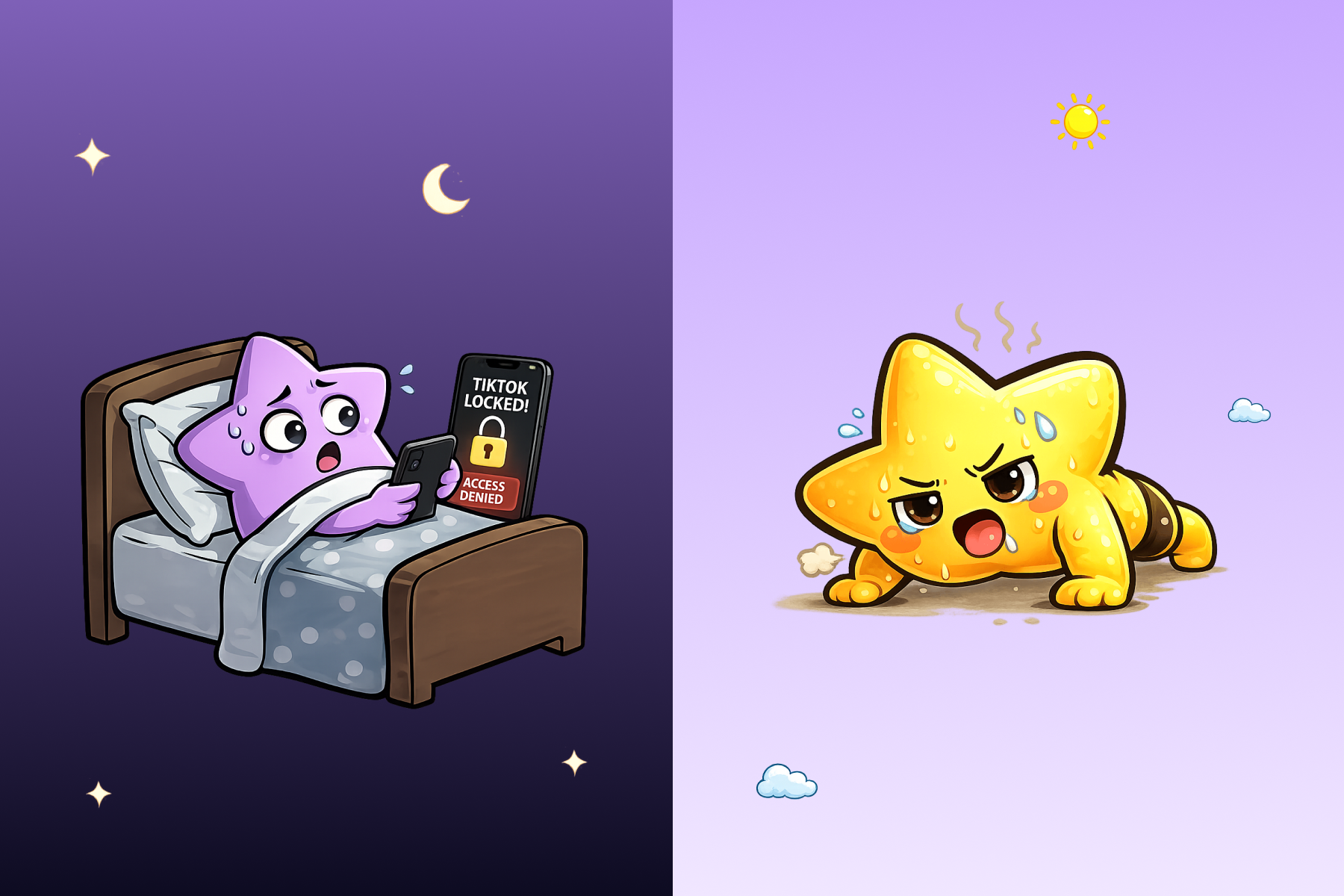
reduce evening light: this is the lever most people ignore because it's invisible. The apps you're using on your phone at 10 PM are emitting blue-wavelength light that tells your suprachiasmatic nucleus it's afternoon. Your melatonin onset - which should begin rising two hours before your intended bedtime - is being actively suppressed. You can dim your screen, use night mode, or wear blue-light glasses. But the most reliable fix is to have apps locked before you reach the window of highest sensitivity. How doomscrolling specifically affects your melatonin and REM sleep →
protect the sleep you have: the quality of your current sleep matters. Poor sleep quality - from alcohol, late eating, or anxiety - produces worse mornings regardless of timing, and worse mornings make earlier bedtimes feel impossible because you can never fall asleep when you want to.
lumi handles the night-end mechanically: apps are blocked at your configured bedtime, the choice to scroll is removed before the moment arrives, and melatonin has a chance to rise on schedule. The bedtime you intend is the bedtime that happens.
lever two: advance wake time gradually
Wake time is the stronger lever for circadian shifting than bedtime - partly because it's externally enforceable (an alarm can force you up) and partly because bright morning light from waking early has a direct phase-advancing effect on the clock.
The protocol:
week 1–2: advance wake time by 15 minutes. Hold it for 4–5 days before moving further. Do not advance further if you're still deeply tired on waking - this means sleep debt has accumulated and you need to also advance bedtime to keep pace.
week 3–4: advance another 15 minutes. Continue at this pace.
weeks 5–8: continue at 15-minute increments until you've reached your target, or until you hit the edge of what feels sustainable without chronic sleep deprivation.
This is slower than every motivational article will tell you to move. It's the pace your biology can actually adapt to.
The critical requirement: wake time must be held on weekends. The most common reason this protocol fails is weekend drift - sleeping in two hours on Saturday and Sunday, which resets the circadian advance you spent all week building. Social jet lag is the enemy of schedule shifting. Seven-day consistency beats any individual morning habit.
lever three: use light as the reset
Morning light is the most powerful tool you have. It costs nothing. It requires no subscription. It advances your circadian clock every time you use it.
Within 30 minutes of waking - even on overcast days, even through a window - get bright light exposure for at least 10 to 20 minutes. Outdoor light, even cloudy, is significantly brighter than indoor lighting. This light signal suppresses residual morning melatonin, triggers the cortisol awakening response, and tells your clock that waking now is correct. Repeated daily, it compounds into a genuine phase advance.
Research combining morning light with gradual schedule advancement and low-dose melatonin showed the strongest results - subjects exposed to two hours of morning bright light during a phase-advancing protocol showed the largest clock shifts, though shorter durations (30–60 minutes) produced meaningful advances too.
Evening light reduction is the mirror intervention: dim your home environment from about two hours before your target bedtime. Overhead lighting at full brightness in the evening is a delay signal. Warmer, dimmer light (or no screens) in that window allows melatonin to begin rising on schedule. The two-hour window before bed is when your clock is most sensitive.
Most people manage morning light passively. Almost no one manages evening light well without structural enforcement - which is the problem lumi solves on the phone side.
why this fails without hard wake enforcement
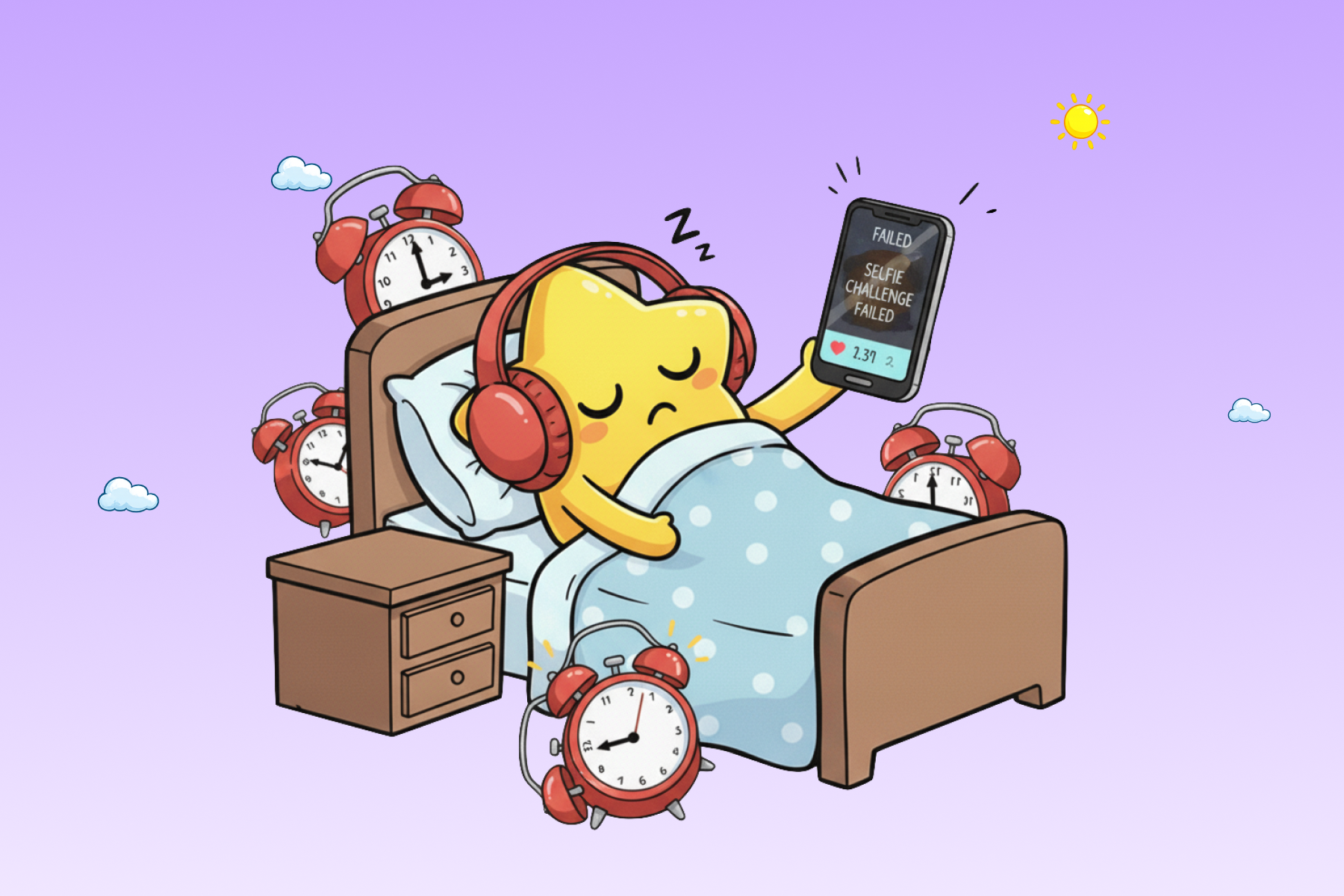
The protocol above works when executed. The problem is execution at the specific moment it matters most: 6 AM, alarm firing, brain still in the inertia window, and the snooze button one tap away.
Every morning where you snooze past your target wake time erases a portion of the circadian advance you've been building. The light you would have gotten at 6:30 AM and didn't, the cortisol spike that was supposed to fire and didn't - these aren't neutral absences. They're delay signals. Your clock reads them as evidence that the new wake time is not actually correct.
Sleep inertia - why you feel like a zombie for 30 minutes after waking → explains the exact mechanism that makes the first few minutes after the alarm the hardest. The short version: the prefrontal cortex, responsible for decision-making, is the last brain region to come online after waking. At the moment your alarm fires, you do not have full executive function available. That is the moment you're relying on willpower to hold the line.
Hard physical enforcement changes the equation. A wake-up challenge that requires walking to another room, scanning a QR code, or completing jumping jacks before the alarm stops doesn't require willpower in the moment of decision - it removes the decision. By the time the challenge is done, you're vertical, blood is moving, and the worst of the inertia window has passed. How wake-up challenge apps actually work →
This matters specifically for chronotype shifting because the new, earlier wake time is by definition uncomfortable for the first two to three weeks. Your biology hasn't caught up yet. You will want to snooze more than you ever have. The structural enforcement is what keeps the schedule held while the clock adjusts underneath it.
realistic expectations: what you can actually achieve
in 3 weeks with full consistency: most people shift 1 hour earlier. Mornings still feel effortful - the clock hasn't fully adjusted - but the pattern is established.
in 6–8 weeks: 2-hour shift achievable for most non-extreme chronotypes. Mornings begin to feel noticeably more natural as the circadian phase genuinely moves.
in 3+ months: the new schedule feels like your schedule. You stop needing to think about it the way you don't think about your current bedtime.
what remains fixed: if you're a confirmed extreme evening type, you will never find 5 AM energising in the way a morning type does. Your cognitive peak will remain in the afternoon and evening. The goal isn't to feel like someone you're not - it's to function at a time that works with your actual life.
The Stanford researcher Jamie Zeitzer, whose lab studies circadian timing, puts it practically: "Get morning light, avoid bright light in the evening, and start developing a consistent wind-down routine. Stick to it, and then gradually shift it earlier - little by little - to help establish a new pattern."
what the influencers get wrong
"just set your alarm for 5 AM": cold turkey schedule shifts produce sleep deprivation, not adjustment. The body doesn't reassign sleep timing overnight. The debt accumulates until the attempt collapses.
"the first hour is the hardest": for chronotype shifting, the first three weeks are the hardest. Not three days. People who frame it as a short discomfort are setting up expectations that lead to quitting on day four.
"it's about discipline": discipline is a finite resource and at its lowest when the alarm fires in the morning. Structure - removing choices that require discipline - is the actual mechanism. What a morning routine that actually works looks like →
"mornings are objectively better": the research doesn't support this. Evening types doing cognitively demanding work in their natural peak hours outperform morning types working in early schedules. The goal is alignment, not conversion. Low dopamine morning routine: whether the science supports it →
"5 AM is the key number": it isn't. Consistency at your target wake time - whatever time that is - is more powerful than a specific hour. A consistent 7:30 AM, held every day including weekends, produces a better-functioning circadian clock than a chaotic 5 AM attempt built on insufficient sleep.
how lumi fits into the shift
lumi is how you hold the line during the shift. Not the goal - the mechanism.
While your circadian rhythm is gradually advancing, your subjective experience will resist it. You'll want to scroll until midnight because that's what your clock currently endorses. You'll want to snooze because the new wake time is earlier than your biology currently accepts. Both of these behaviors reset the advance.
lumi removes both.
Bedtime app blocking means the evening light suppression happens at your configured time, not when you finally manage to put the phone down at 1 AM. The melatonin window stays intact. The wake challenge means the early alarm is held even in the inertia window, when you'd otherwise snooze it. The phase advance accumulates instead of resetting.
After 3–4 weeks - once the new schedule is established - the enforcement becomes less critical. Your clock has moved. The new wake time is no longer fighting your biology. But during the transition, the structure is the difference between the attempt succeeding and the attempt lasting a week.
lumi is the structural commitment device your biology needs while the new schedule is being set.
You might not become a 5 AM person. But you can become a 7 AM person. Try lumi free for 7 days →