You open Instagram at 8 AM. By 9 AM, your actual work feels grey. Not hard. Just... dull. The kind of dull where you keep checking your phone for relief that doesn't come, and the tab you need to be in sits open and unstarted.
It's a dopamine architecture problem.
what dopamine actually does (it's not what most people think)
Most people hear "dopamine" and think pleasure. That's the popular version. The neuroscience is more interesting and more useful.
Dopamine is primarily an anticipation and motivation chemical. Research by Kent Berridge at the University of Michigan established a distinction that matters here: dopamine governs wanting, not liking. It fires in anticipation of a reward, not in response to receiving it. It's the molecule that makes you pick up your phone, not the one that makes you feel satisfied once you have.
The deeper mechanism is what Dr. Anna Lembke, a Stanford psychiatrist and author of Dopamine Nation, describes through opponent-process theory. When dopamine is released - when the balance tips toward pleasure - the brain immediately begins working to restore equilibrium by tipping equally toward pain. No free lunch. The higher and faster the spike, the more pronounced the compensatory dip. That dip is the flatness you feel after the scroll. The craving for the next one.
This isn't a character flaw. It's homeostasis. The brain regulates itself and won't allow a constant state of dopamine highs. When you flood the system repeatedly with easy, high-contrast rewards, the baseline adjusts downward to compensate. The same inputs feel less rewarding over time. And the effort-requiring tasks you actually need to do - which generate slower, more diffuse dopamine through sustained work - fall below the threshold of feeling worthwhile.
Our experience of pleasure at any given time is relative to our baseline rate and relative to what has come before. That's the key sentence. Relative to what has come before.
If the first thing your brain encounters in the morning is a scroll through social media - unpredictable reward, social comparison, news anxiety, viral content specifically engineered to trigger dopamine release - everything that follows it is working against that spike's shadow.
what a low dopamine morning actually looks like
The term sounds clinical. The practice is simple.
A low dopamine morning means protecting the first 30 to 60 minutes after waking from high-stimulation, low-effort inputs. That includes:
what to avoid in the first hour:
- social media (any platform)
- news (headlines are engineered for maximum arousal)
- podcasts or music with high emotional stimulation
- email and notifications
- immediate caffeine (coffee on an empty stomach spikes cortisol and can amplify anxiety; water first is the lower-stimulation default)
what to do instead:
- water, before anything else
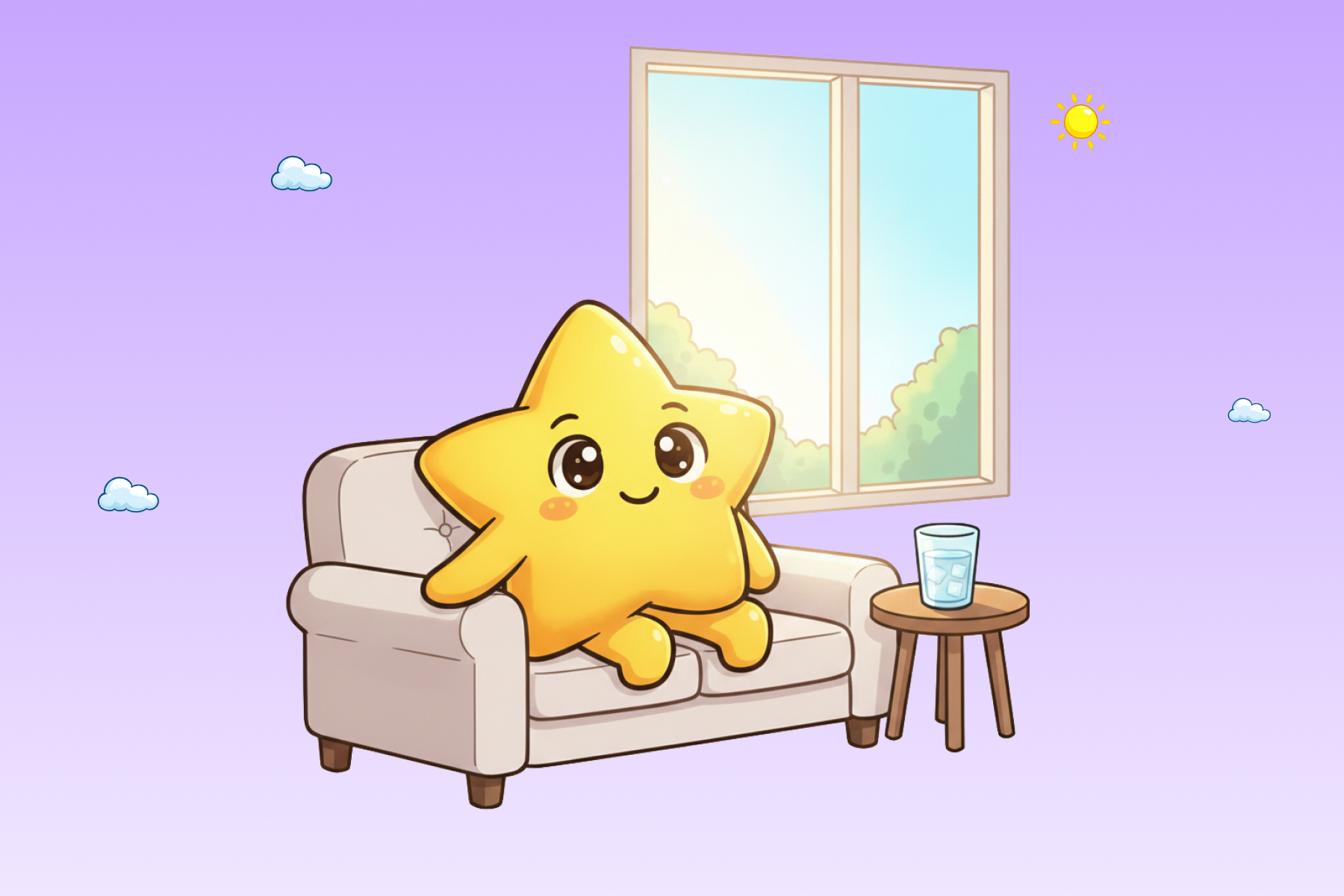
- light exposure - outside or near a window - which advances your circadian rhythm without triggering the reward system
- movement, even brief: five minutes of walking, stretching, or a physical challenge
- one low-stimulation anchor activity before the phone comes out: make coffee, journal a sentence, sit outside
The goal isn't suffering through boredom. It's keeping the contrast low enough that the first dopamine-generating thing you do is something that actually matters to you - real work, a conversation, a task - rather than a stimulus your phone served you.
After that anchor activity, open whatever you want. The window isn't about restriction. It's about sequence.
For the broader framework on how this fits into a morning that actually holds, the morning routine that actually works covers the cortisol and circadian science that runs alongside the dopamine side.
does the science actually support this?
Here's the honest version.
what is well-established:
The core neuroscience is real, even if the popular framing oversimplifies it. Dopamine is not just the "feel-good chemical", it is more accurately the wanting chemical. It fires in anticipation of a reward, not just during one, which is why scrolling feels compulsive even when it stops being enjoyable. Research in addiction neuroscience has also long established that every pleasure spike comes with a cost: the brain compensates by pulling you back below baseline, which is why the post-scroll flatness is not just in your head. The more often you trigger those spikes, the higher the threshold your brain sets before it registers motivation or satisfaction from anything else.
what is extrapolated:
Where the science gets thinner is the specific morning claim. The idea that protecting the first 30–60 minutes of your day from your phone will measurably improve everything that follows has not been tested in a controlled study. "Low dopamine morning" is a term that came out of podcast and wellness culture, most visibly Andrew Huberman's, as an interpretation of established neuroscience, not as a finding in its own right. The name is also a little misleading: you are not trying to lower your dopamine, you are trying to stop it from being hijacked before your day has started. The brain wakes up with a clean baseline. Handing it a feed of infinite, effortless stimulation in the first few minutes raises the bar for everything that follows.
So the honest answer is: the mechanism is real, the morning-specific protocol is a reasonable extrapolation, and the direct evidence for it is limited. Those three things can all be true at once.
why it's harder than it sounds
The no-phone morning concept has been around long enough that most people have tried it and given up. Here's why it fails.
The problem is that willpower is at its lowest in the conditions where you need it most. Groggy, half-awake, alarm just went off, that is not a state in which good intentions override automatic behavior. If your phone is the first thing your hand finds in the morning, you will open it. Not because you're weak. Because that's how automatic behavior works: stimulus, response, before the prefrontal cortex has fully come online.
The research on habit formation is clear on this: you cannot reliably override a strong cue-behavior pattern with intention alone. You need to change the structure - remove the cue, introduce friction, or replace the behavior with something that fires first.
A low dopamine morning doesn't work as a resolution. It works as a system.
how lumi enforces a low dopamine morning without willpower
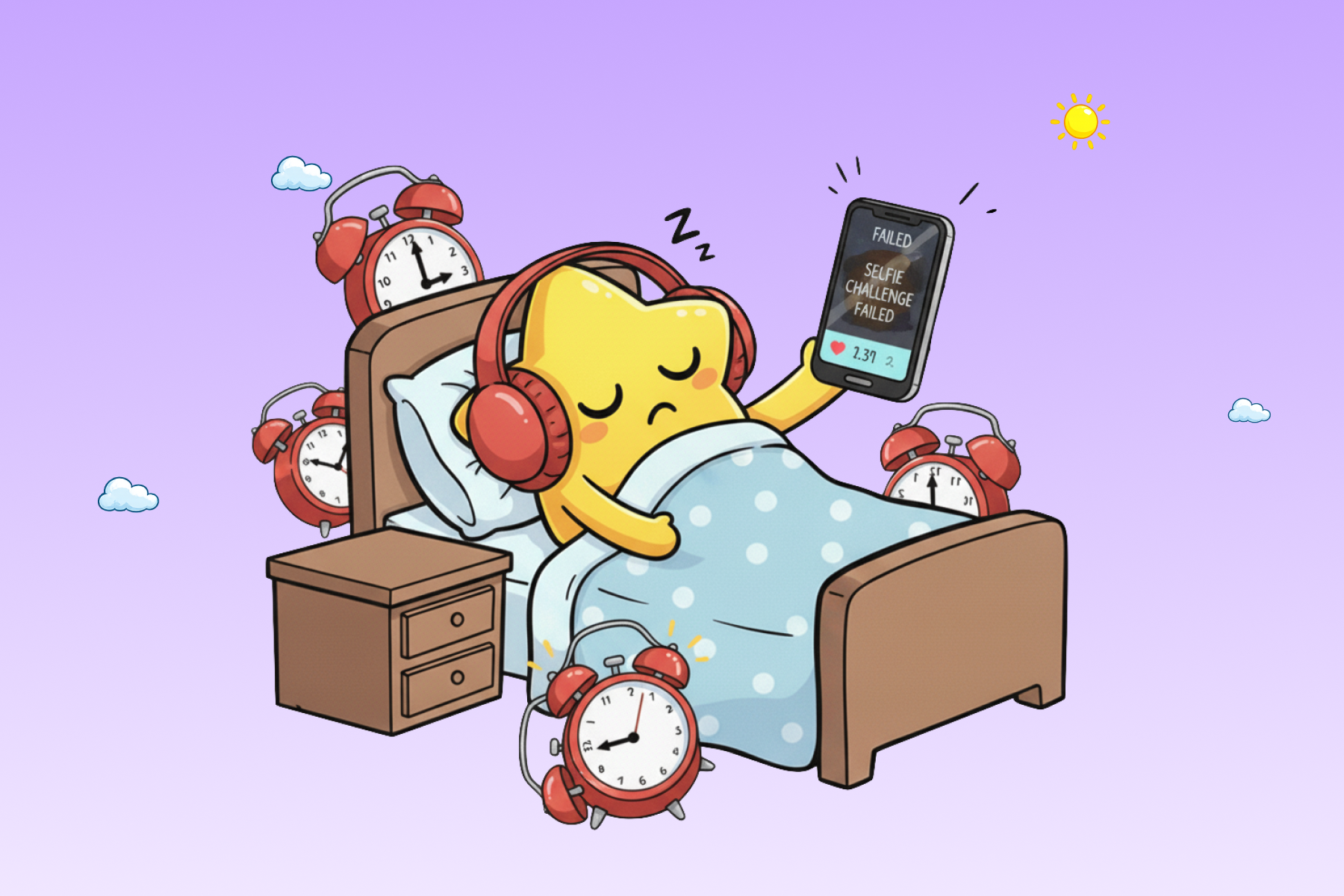
lumi's bedtime lock keeps your apps blocked through the night. When the alarm fires in the morning, it presents a challenge. Walking thirty steps. Solving a math problem. Scanning a QR code in another room. Smiling for the front camera.
You complete the challenge. The alarm stops.
That gap the time between waking up and your first app open, is a low dopamine morning by design, not by willpower. You've moved your body. You've introduced light. You've done something that required effort before any effortless reward was available. The baseline is intact.
It doesn't require you to decide every morning not to check your phone. The structure decides for you.
lumi delays your first app open until after your wake challenge. That delay might be the whole trick. Try lumi free for 7 days →
If you want to understand what the night before does to your morning dopamine architecture, doomscrolling and sleep: what late-night scrolling does to your brain covers the melatonin, cortisol, and REM side that runs in parallel.
should you try a low dopamine morning?
If your mornings feel grey, unfocused, or like you're already behind before you've started, yes, try it. The cost is thirty minutes of not opening social media. The downside is negligible. The upside, if the behavioral logic holds for you, is significant.
The version worth trying: no social media, news, or notifications for the first 30 minutes after waking. Water, light, one anchor activity, then open whatever you want. Not forever. Just that window.
If willpower is the obstacle and for most people it is use a structural solution. An app that keeps apps locked until you've completed a physical challenge is the closest thing to a forced low dopamine start that currently exists.
The science supports the mechanism. The experience of trying it supports the outcome. That's enough to run the experiment.