how sleep cycles work and why waking mid-cycle feels terrible
Sleep doesn't work like a battery draining evenly and then recharging. Your brain cycles through distinct stages: light sleep, slow-wave deep sleep, and REM in loops that last roughly 90 minutes each. A full night runs four to six of these back-to-back, and the composition shifts as the night progresses. Early cycles are heavier on deep sleep. Later cycles carry more REM.
Waking mid-cycle, especially mid-deep-sleep, produces what researchers call sleep inertia, the grogginess that makes 6 AM feel like a physical assault even when you technically slept enough hours. Your brain is being hauled out of a state it wasn't finished with. Caffeine masks that transition for about an hour. It doesn't complete it.
People who wake near the end of a cycle feel noticeably more alert, sometimes dramatically so, even at slightly fewer total hours than someone who slept longer but hit the alarm at the wrong point. Timing is doing real work here, not just duration.
The 15 minutes this calculator adds before counting cycles backward isn't arbitrary padding. It represents the average sleep-onset latency: the time between lying down and actually falling asleep. Most people aren't unconscious the moment their head touches the pillow. That gap matters for the math to land accurately.
the part of your night that late scrolling actually steals
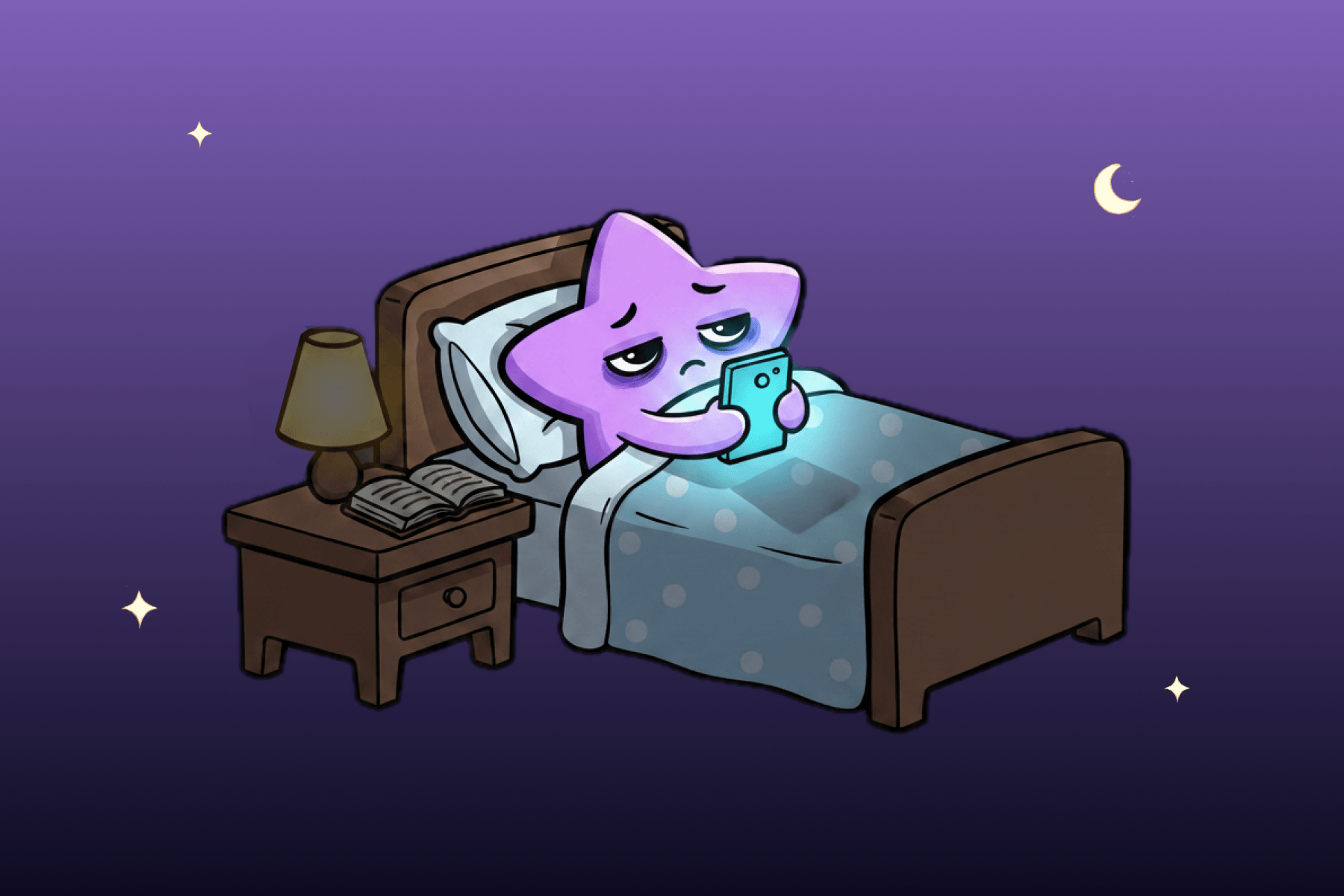
When doomscrolling pushes your bedtime from 10:30 PM to 1 AM, you don't lose a proportional sample of all sleep stages. You lose the back of the night. And the back of the night is where REM sleep concentrates.
REM is where emotional regulation runs maintenance. Where memory consolidation happens. Where your brain processes the social and emotional texture of the day. Losing an hour of it isn't like losing an hour of light sleep, the cost is asymmetric, and it shows up in mood and cognition in ways that you might attribute to stress, personality, or just being a bad morning person.
You're not a bad morning person. You have a phone with no concept of your bedtime and a feed optimised to keep you engaged at 1 AM with the same intensity it uses at 1 PM. Doomscrolling and sleep: what late-night scrolling does to your brain is the longer read on why that hour-for-hour doesn't trade off evenly against the front of the night.
why consistency matters more than perfection
A slightly imperfect schedule held consistently will outperform an "ideal" schedule that collapses on weekends.
Your circadian rhythm is maintained by regularity: cortisol, melatonin, body temperature, and hunger all run on predictable 24-hour timing. When your wake time swings two or three hours between weekday and weekend, your body experiences a phase shift equivalent to travelling across time zones. Every week. Without leaving the house. Monday morning doesn't feel bad because Sunday was fun. It feels bad because your internal clock is still on Saturday night.
The research is consistent on this: circadian regularity correlates with better mood, faster sleep onset, and more restorative sleep quality, independent of total sleep time. A fixed wake time is the single most reliable anchor. Pick a schedule you can actually hold, use the calculator to find the cycle-aligned bedtime, then enforce it with something more durable than intention. When the real problem is weekday versus weekend midsleep drifting apart, quantify it with the sleep schedule fixer before you blame the cycle math alone.
how much sleep do you actually need?
More than you think. That's not a motivational statement, it's a consistent finding in sleep research. People chronically underestimate their sleep needs, and they consistently overestimate how much cognitive recovery they get from a single long weekend sleep after a week of short nights.
The standard guidance: seven to nine hours for most adults is a planning range, not a prescription. Genetics, training load, illness, and medications all shift individual targets. The more useful frame: how many hours leaves you waking naturally, without an alarm, feeling ready? For most adults, that number is higher than what they're currently getting.
What you can't do is outrun sleep debt with caffeine indefinitely. The impairment from chronic partial restriction accumulates across nights in ways that closely track total sleep deprivation while your subjective sense of sleepiness adjusts downward. You feel less tired than you are. You perform worse than you think you do. If your “target” hours in this calculator rarely match what you actually log, the sleep debt calculator sums the gap across seven nights so the pattern is visible.
| Stage | Ages | Typical guideline |
|---|---|---|
| Newborn | 0–3 months | 14–17 hours (including naps) |
| Infant | 4–11 months | 12–15 hours (including naps) |
| Toddler | 1–2 years | 11–14 hours (including naps) |
| Preschool | 3–5 years | 10–13 hours (including naps) |
| School-age | 6–12 years | 9–12 hours |
| Teen | 13–18 years | 8–10 hours |
| Adult | 18–64 years | 7–9 hours |
| Older adult | 65+ years | 7–8 hours |
why knowing your bedtime isn't the same as keeping it
You already knew approximately when you should sleep before you opened this page. The problem isn't information. The problem is that the decision to stop scrolling gets relitigated every night at exactly the moment you're least equipped to make it well.
Tired-you and well-rested-you don't share values. Tired-you is operating with reduced prefrontal function, elevated arousal from whatever the feed just showed you, and a phone that has been engineered specifically to exploit both of those conditions at once.
That's what lumi's bedtime lock exists for. You set the lock time when you're calm and thinking clearly. At that time, the apps that would otherwise eat your sleep window become structurally unavailable. The version of you reading this right now sets the rules. Midnight-you just has to live with them. If you already have a target bedtime here but feeds keep pushing you later, the doomscroll damage calculator turns nightly scroll minutes into “restorative minutes displaced” so the tradeoff isn't abstract - and how to build a bedtime routine you'll actually stick to gives you a low-effort wind-down to run once the scroll option is gone.