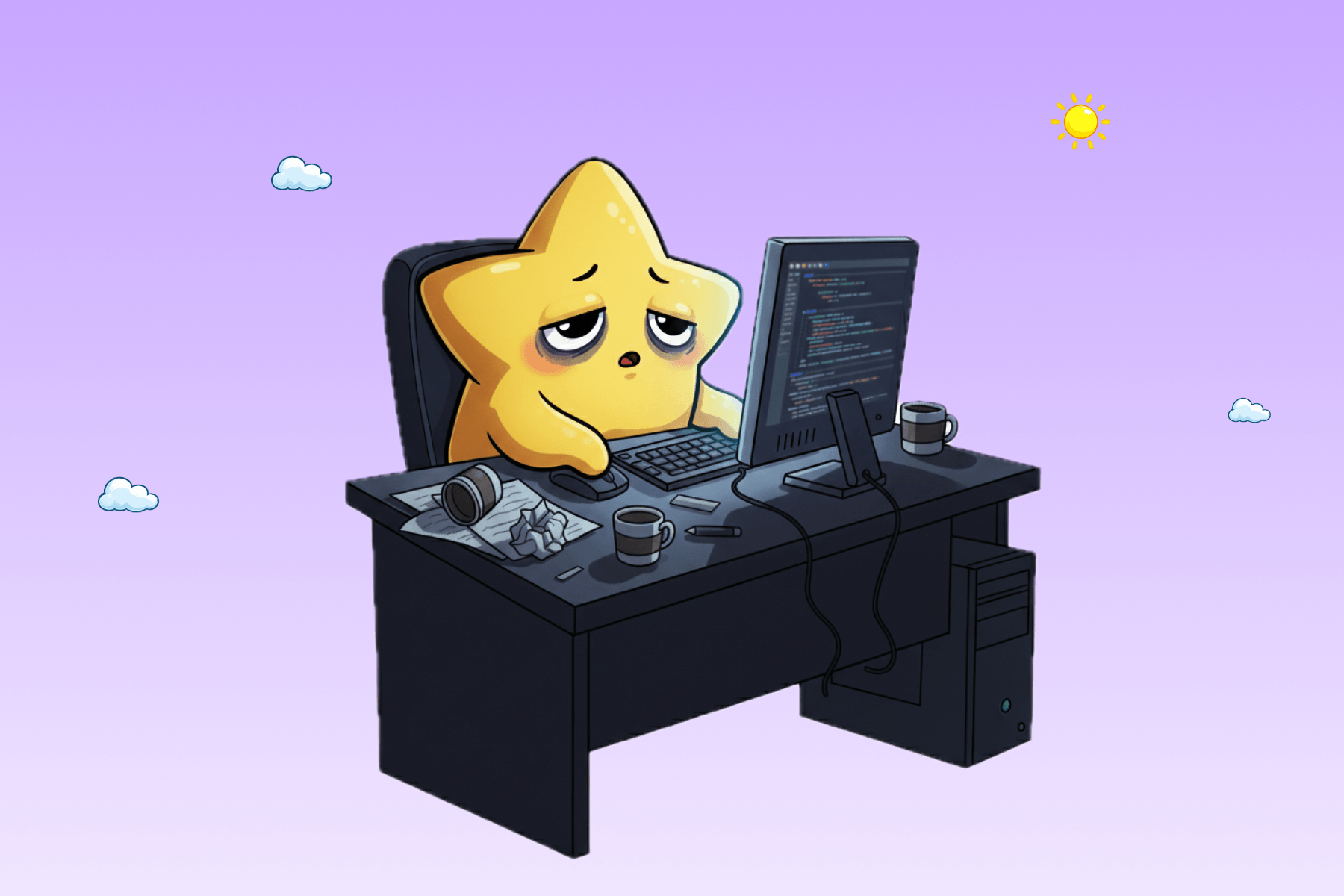
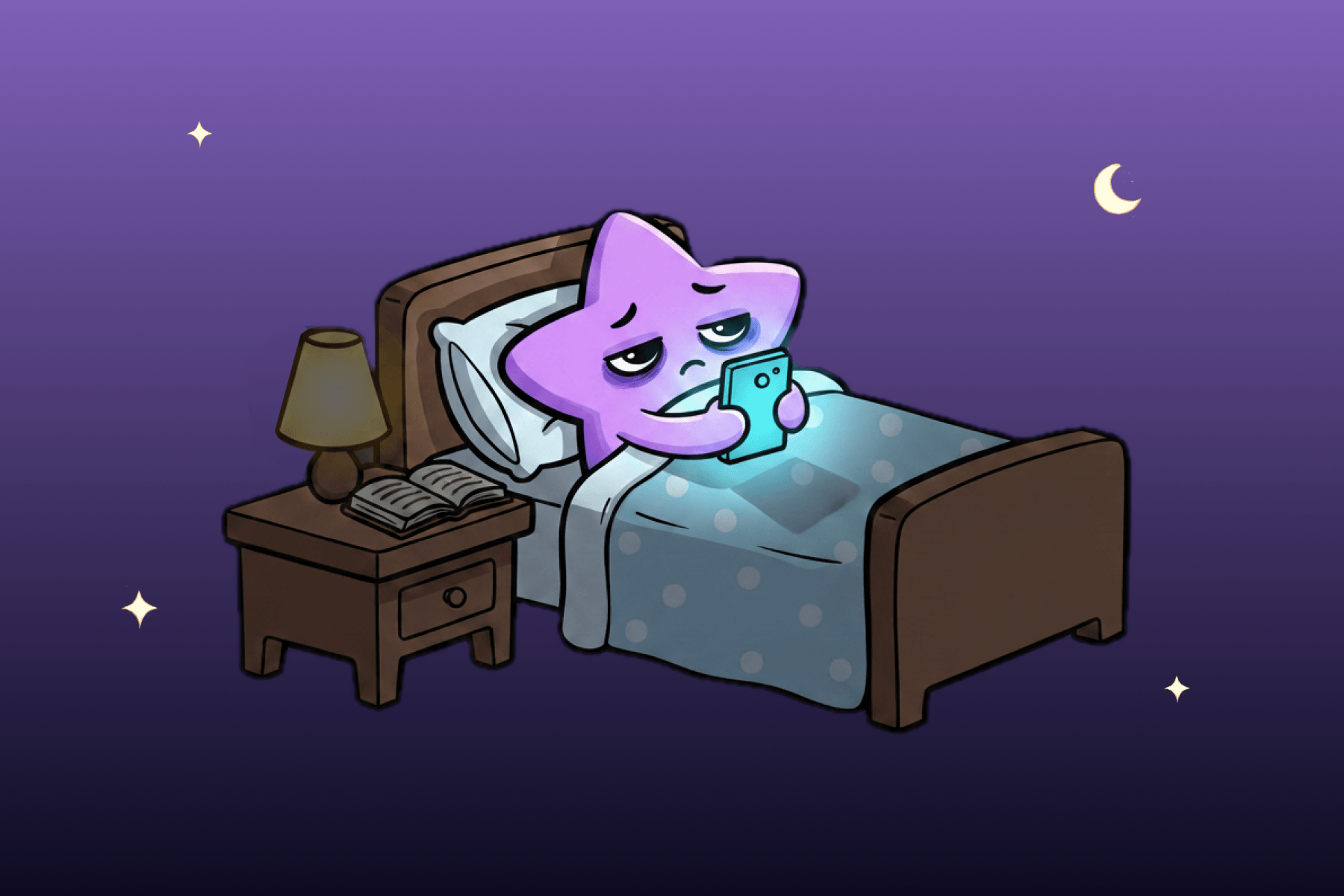
doomscroll damage calculator: what is your phone actually costing you each night?
You already know late-night scrolling is bad for sleep. Everyone knows. The knowing hasn't fixed it - because knowledge isn't the bottleneck. The bottleneck is that the apps you're scrolling were designed by teams whose job was to make sure you kept scrolling past midnight, and that design is operating on your brain at exactly the moment your brain is least capable of overriding it.
This calculator doesn't lecture you. It translates your nightly scroll estimate into a number - restorative minutes displaced from your sleep window - so the cost stops being abstract.
what doomscrolling does to your brain at night
The mechanism isn't just blue light, though that's part of it. Bright screens in the evening suppress the melatonin ramp your body uses to signal sleepiness - delaying sleep onset and pushing your effective bedtime later without you consciously choosing a later bedtime. A study by Gooley et al., published in the Journal of Clinical Endocrinology & Metabolism, found that pre-bed light exposure suppresses melatonin by up to 50%, delaying sleep onset by 60 to 90 minutes. Screens held close to the eyes in a dark room produce similar effects - the geometry concentrates the exposure in a way that overhead room lighting doesn't. For an illustrative curve of natural versus shifted melatonin timing from device count and exposure length, use the melatonin suppression clock alongside this page.
But the bigger mechanism is arousal. Social feeds, news, and short-form video are engineered to maintain engagement by sustaining psychological activation. Outrage, curiosity, mild anxiety, and social comparison all produce a cortisol response. Cortisol is your stress hormone. It's also a direct sleep antagonist - it suppresses melatonin and signals alertness. You're not just staring at a screen at midnight. You're feeding your stress system a continuous stream of inputs specifically designed to keep it running.
The combination - melatonin suppression plus sustained cortisol activation plus ongoing arousal - doesn't just delay sleep onset. It distorts what sleep looks like when it finally arrives.
the sleep it's actually stealing: why REM is the real cost
Your sleep architecture isn't uniform across the night. Early cycles are heavier on slow-wave deep sleep. The later half of the night - the hours between 3 AM and when you actually wake up - carries the REM-dense cycles where emotional regulation, memory consolidation, and creative processing happen.
When scrolling pushes your sleep onset from 10:30 PM to 1 AM, you don't lose a proportional slice of each stage. You lose the back of the night. The REM cycles that were scheduled for 4 AM through 7 AM disappear entirely if your alarm fires at 7 regardless of when you fell asleep. Research published in Sleep Medicine Reviews confirms that REM sleep loss is disproportionately damaging compared to disruption of other stages - the cognitive and emotional costs are asymmetric.
This is what "restorative minutes displaced" means in the calculator. It's an educational estimate framing the cost in the terms that matter: not hours in bed, but the specific sleep your brain needed most that the scroll session removed from the back of your night. The long-form version of that story - melatonin, REM, cortisol, and the morning after - is doomscrolling and sleep: what late-night scrolling does to your brain.
why you keep doing it anyway, the willpower explanation that actually makes sense
This is worth understanding not as an excuse, but as a reason to build structure instead of relying on resolve.
The prefrontal cortex - the brain region responsible for impulse control, long-term planning, and overriding short-term impulses - is progressively impaired by both fatigue and circadian pressure. By 11:30 PM, the version of you holding the phone has meaningfully reduced executive function compared to the version who set an intention to stop scrolling at 10. The apps know this. They're not designed for your 9 AM self. They're optimised for the late-night, lower-inhibition version who is the easiest to keep engaged.
Studies comparing structural restrictions to reminder-based nudges found substantially larger reductions in late-night openings when friction was structural rather than suggestive. Reminders ask you to make a decision. If your failure mode is negotiating with yourself at 11:30 PM, how to stop doomscrolling at night (without relying on self-control) is the on-site companion to that research.
what the shareable card is actually for
The roast card in this tool is designed to be sent. That's not vanity - it's based on how behaviour change actually works. Mirror messaging, where you see your own habits reflected back in concrete terms, converts more reliably to changed behaviour than abstract warnings. "312 restorative minutes displaced last week" lands differently than "try to use your phone less before bed."
There's also a social commitment mechanism here. Making your habits visible to someone else - even a single accountability contact who also doomscrolls - increases follow-through on the nights motivation is low. Which is most nights.
what actually changes the pattern
Seeing the damage motivates briefly. That brief window is exactly when you should use lumi to set up structural protection that works without needing motivation again.
lumi's bedtime lock is set during a moment of clarity. At the lock time, the apps that would have extended your night become unavailable. The scroll doesn't stop because you decided to stop. It stops because the option is gone.
The version of you reading this right now is in a better position to make that decision than the version of you at midnight. Make it now - and if you still need something to do with your hands before bed instead of the feed, 15 things to do instead of doomscrolling before bed lists swaps that don't rely on midnight discipline. Other planners and calculators are on the free tools hub.