The idea behind a sunrise alarm clock is intuitive to the point of feeling obvious. For most of human history, the thing that woke people up was light - the sun brightening gradually through the night into morning. The jarring beep of a standard alarm is a roughly 100-year aberration. Maybe restoring the light solves the problem.
That's the pitch. Here's what the science actually says, where it falls short, and whether it's worth your money.
how a sunrise alarm clock works
A sunrise alarm clock - sometimes called a wake-up light or dawn simulator - produces a gradual increase in light intensity starting 20 to 40 minutes before your set alarm time. It typically begins as a warm amber glow at low lux, climbing toward a bright white daylight temperature by the time the audio alarm fires (or by the time you've woken naturally from the light alone).
The mechanism it's targeting is circadian. Light is the primary time signal for the brain's internal clock, located in the suprachiasmatic nucleus of the hypothalamus. When light enters your eyes - even through closed eyelids - it suppresses melatonin and triggers a natural rise in cortisol, your body's alerting hormone. A sunrise alarm brings this transition forward, so that by the time you're supposed to wake, your brain chemistry is already moving in the right direction.
The concept itself is over 130 years old. Dawn simulation was first patented in 1890 as "mechanical sunrise." Clinical trials by David Avery at Columbia University in the 1980s established early evidence for its effectiveness, particularly for seasonal affective disorder. The modern LED version of the category is the hardware expression of that research.
what the science says
The clinical evidence for sunrise alarms is better than most sleep products can claim.
Research testing gradual dawn simulation against control conditions has found sleep inertia - the groggy, disoriented state that follows abrupt waking - to be significantly reduced in subjects who used simulated dawn light. One 2010 study with 23 subjects across two experiments found that both 50-lux and 250-lux dawn groups showed significantly better sleep inertia scores and mood than the control group. Cortisol was also measurably higher in the dawn simulation group 30 minutes after waking - a healthier, more natural rise than the stress-cortisol spike triggered by a sudden loud alarm.
The effect on seasonal affective disorder is particularly well-evidenced: a 6-week randomised controlled trial in 95 participants found higher response and remission rates with 90-minute dawn simulation than with a dim placebo or a separate bright-light protocol. Eight clinical trials have found positive effects on winter depression.
For general sleep quality outside of clinical settings, the research shows more modest but consistent improvements: better self-reported alertness, mood, and reaction time in the first hour after waking compared to standard alarm waking.
Several small clinical studies show that artificial dawn before a set wake time reduces sleep inertia and can modestly improve subjective well-being, mood, and cognitive performance on simple tasks, according to Dr. Adjoa Boateng Evans, ICU physician at Duke University School of Medicine.
The verdict from the evidence: sunrise alarms work, and the mechanism is real.

the honest limitations
Most sunrise alarm clock reviews skip this part. Here are the conditions where they underperform.
they only work near your natural wake time
The core mechanism relies on the light signal reaching your brain as you approach the end of a sleep cycle. If the light starts while you're in the middle of deep slow-wave sleep - which is far more likely if you went to bed late and your alarm is set for earlier than your body wants to wake - the light signal isn't enough to shift brain state.
Light enters through closed eyelids at reduced intensity. That's enough to influence a brain that's already in late-cycle light sleep. It's not enough to pull a brain out of deep sleep stages. The light stimulation may not be bright enough for particularly deep sleepers. If you're consistently sleeping too little, there isn't an alarm, sound, or light that would make waking up feel good.
This is the most important caveat and the one that gets buried. A sunrise alarm makes gentle waking possible. It doesn't make waking up on five hours of sleep feel fine.
they require a dark room
For the gradual brightness to register as a signal, it needs contrast. If your room already gets early morning light from uncovered windows, the sunrise lamp is competing with ambient light that arrived before it started. The effect is significantly reduced.
they don't enforce waking
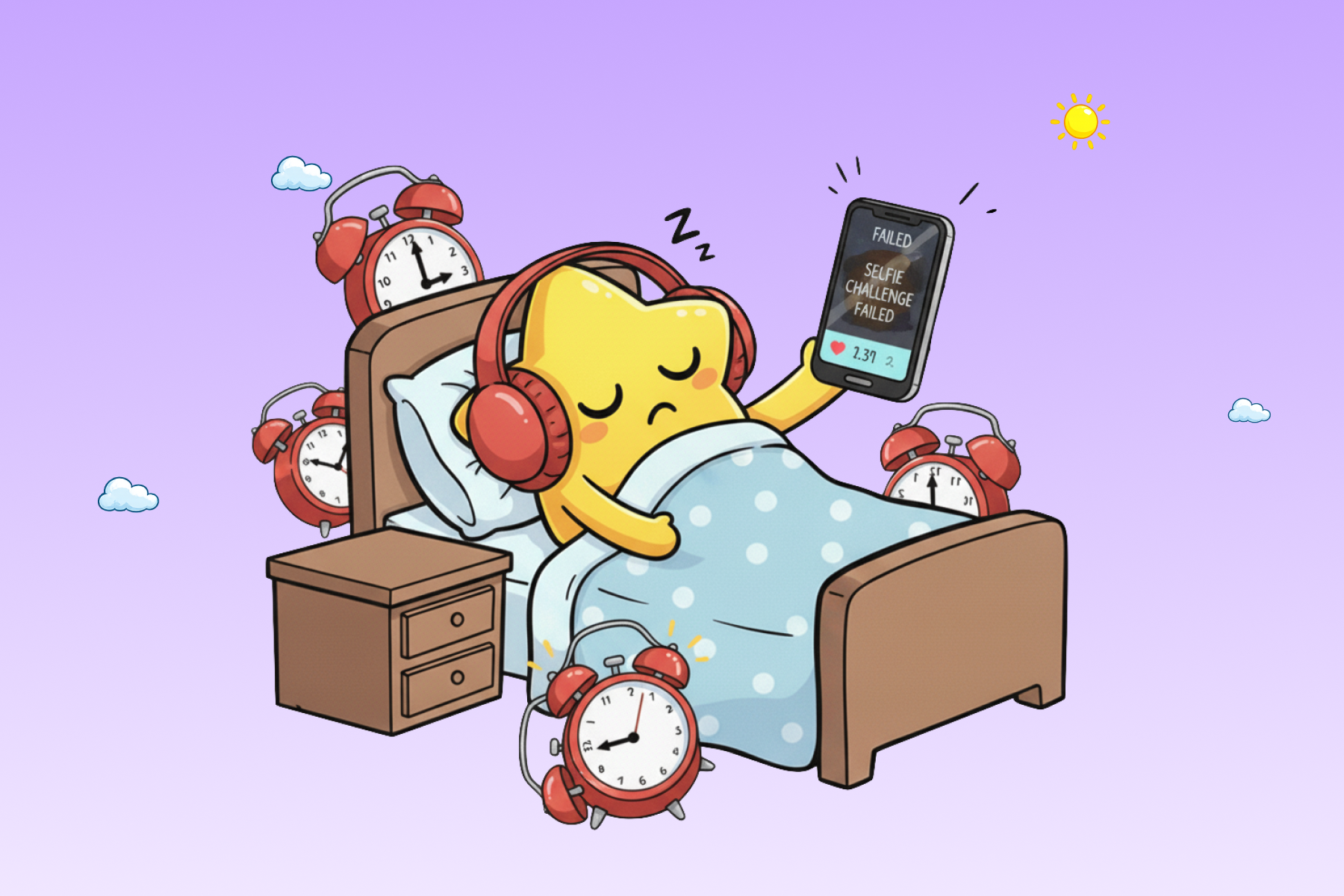
A sunrise alarm makes waking easier. It doesn't make it mandatory. You can still close your eyes, turn over, and fall back asleep once the lamp has reached full brightness. For anyone with a serious snooze habit, this is the product's fundamental limitation - it optimises the conditions for waking without removing the choice to not.
where lumi fits
lumi doesn't make hardware. But sunrise alarm clocks and lumi solve adjacent problems that are often confused for the same problem.
A sunrise alarm clock solves how you wake up - smoothing the transition from light sleep to wakefulness, reducing sleep inertia, and supporting a natural cortisol rise. That's genuinely valuable.
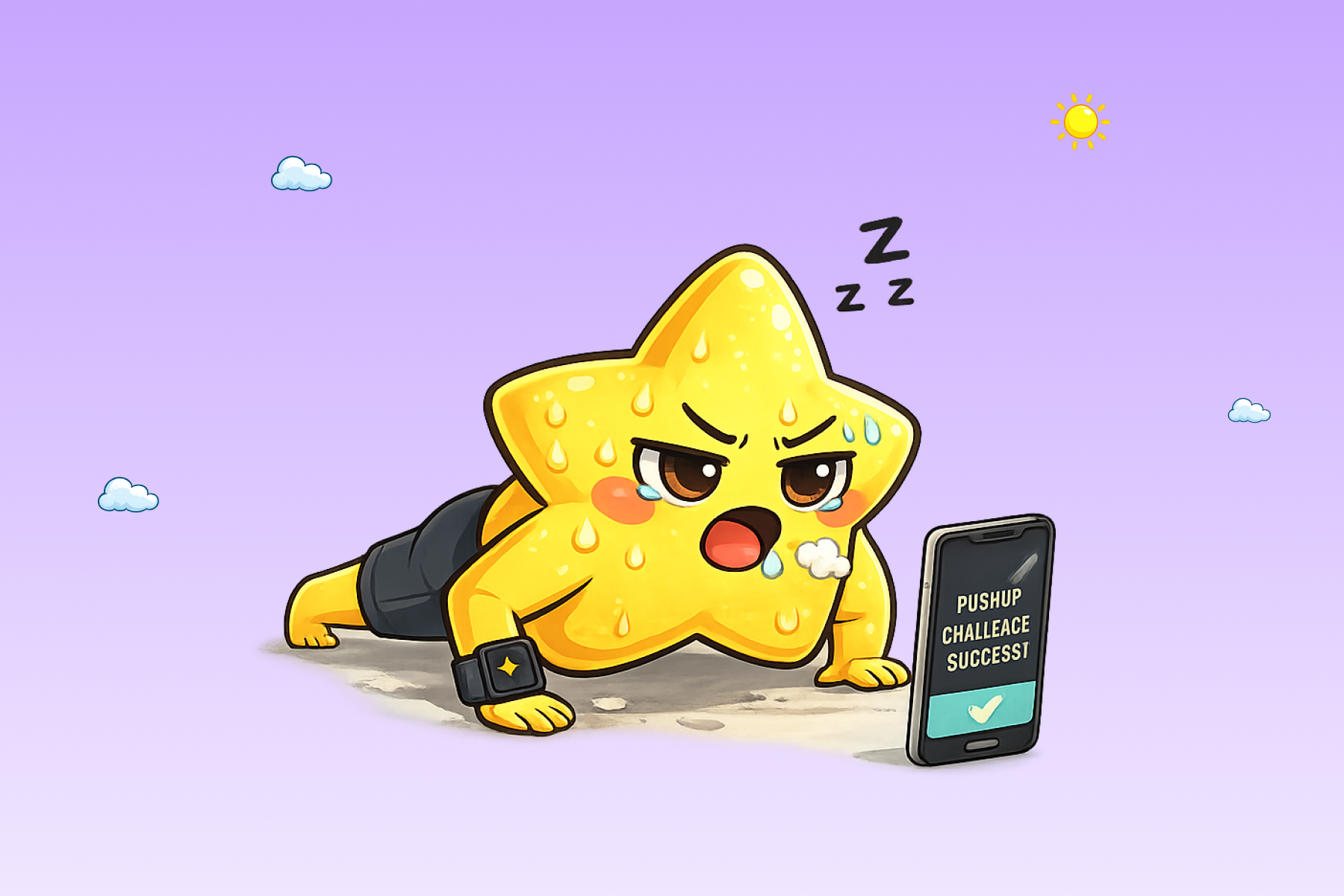
lumi solves whether you actually get up and stay up - through a challenge that requires you to be vertical, active, and physically present before your apps unlock.
For most people with real morning dysfunction, both are useful. The sunrise alarm does the preparatory work: it brings you into light sleep and gives your brain the right chemical conditions for waking. The lumi challenge finishes the job: it verifies you're actually up and guarantees you can't dismiss the alarm without completing something that requires genuine wakefulness.
Sunrise alarm first, lumi challenge to confirm. That combination covers what neither does alone.
If your morning problem starts the night before - too late a bedtime, late-night scrolling, disrupted sleep - the sunrise alarm will still struggle to make a good morning out of bad sleep. Why you can't wake up in the morning (it's not laziness) covers the bedtime side of that equation.
Sunrise alarms are a good start. lumi makes sure you finish. Try lumi free for 7 days →
the verdict
Sunrise alarm clocks work - the mechanism is sound and the clinical evidence is above average for a sleep product. They're worth buying if you're a reasonably consistent sleeper who struggles with jarring-alarm sleep inertia, if your bedroom is dark, and if your wake time is roughly aligned with your natural sleep window.
They won't rescue you from chronic sleep deprivation. They won't prevent you from rolling over and ignoring them. And they won't help if you're regularly going to bed two hours after your body wants to.
If all you need is a gentler transition from light sleep to waking, a sunrise alarm is the right tool. If you need structural enforcement, something that actually makes dismissal contingent on being awake - pair it with a challenge alarm, or replace it with one.