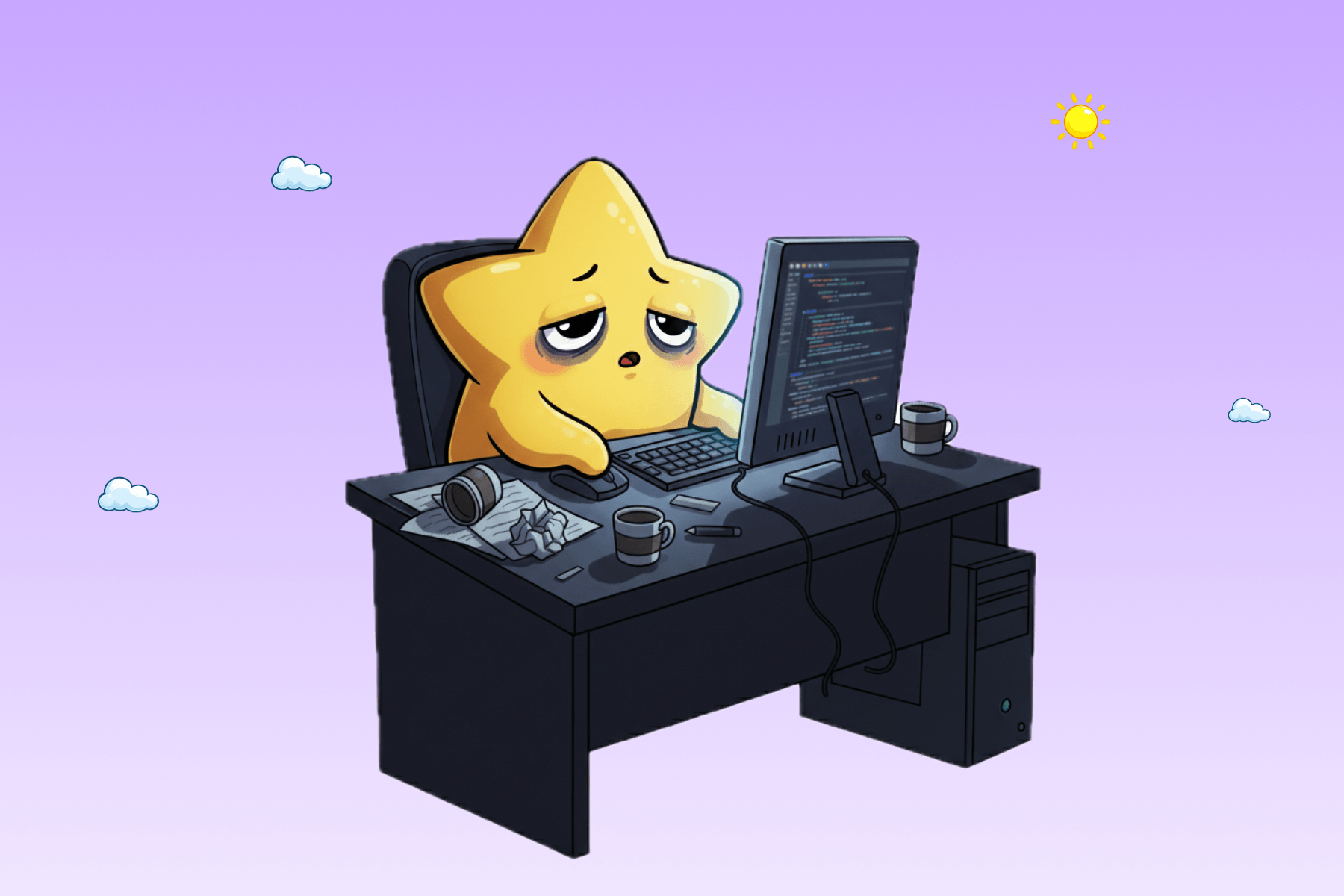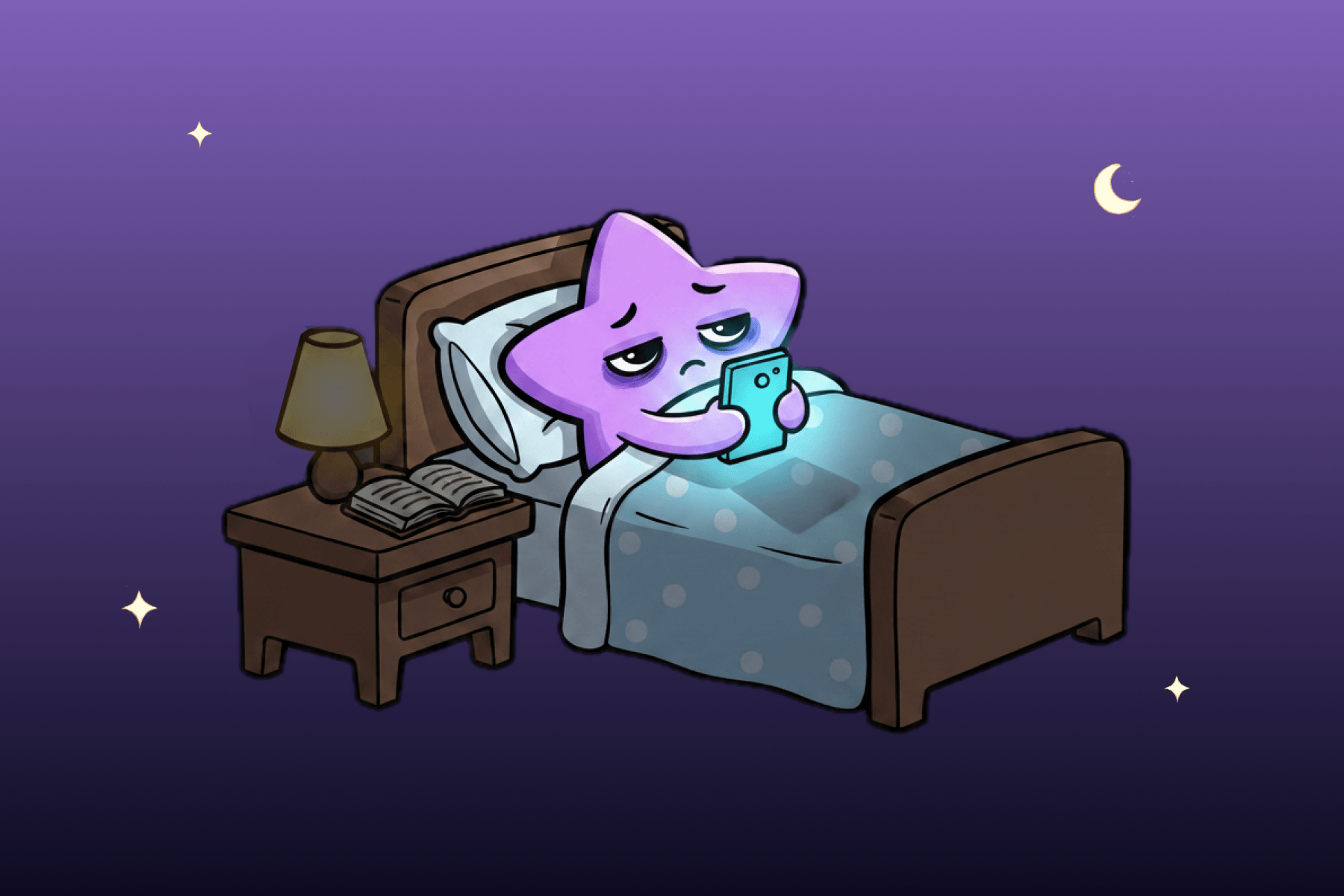

melatonin suppression clock: what your phone is doing to your sleep signal right now
You've heard "blue light is bad for sleep" enough times that it's become background noise. Here's what's actually happening specifically enough to be worth paying attention to.
Your body doesn't decide to sleep the way you decide to sit down. It approaches sleep over hours through a cascade of hormonal and neurological shifts. Melatonin produced by the pineal gland in response to darkness is one of the primary gate signals in that process. It doesn't put you to sleep directly. It signals that sleep is now appropriate. It shifts your perception of tiredness. It prepares the biological conditions for sleep to happen well.
Evening screen exposure delays that signal. This tool shows you by how much based on how many devices you had running and how long you were on them. If you already know your nightly scroll minutes and want that habit framed as lost restorative sleep, run the numbers through the doomscroll damage calculator too - it complements this chart from the “minutes on the feed” side.
what melatonin suppression actually does to your night
The research here is more specific than "blue light bad." The photoreceptors most responsible for circadian light sensitivity are intrinsically photosensitive retinal ganglion cells ipRGCs which connect the retina to the suprachiasmatic nucleus, your brain's master circadian pacemaker. They're most sensitive to short-wavelength light in the 460–480 nanometre range, which sits squarely in the blue portion of the spectrum that smartphone displays emit in significant quantity.
A study by Gooley et al. in the Journal of Clinical Endocrinology & Metabolism found that pre-bed light exposure suppresses melatonin by up to 50% and delays sleep onset by 60 to 90 minutes. Research examining the alerting effects of blue-enriched light found that the arousal response can persist for three to four hours after the light source is removed. That means scrolling until midnight doesn't just delay your melatonin ramp until you put the phone down. It delays it well past that.
Smartphones concentrate luminance close to the eyes in a dark room which meaningfully amplifies the circadian impact compared to the same brightness from overhead room lighting. The screen is close, the room is dark, and the content is engineered to hold attention far longer than intended. All three factors compound.
what melatonin suppression feels like from the inside
The subjective experience of disrupted melatonin timing isn't always legible as a sleep complaint. It tends to present as other things.
Lying awake despite exhaustion. You're genuinely tired. Your body won't shift into sleep. This is what delayed melatonin onset feels like from the inside - the readiness signal hasn't arrived yet, even though the fatigue is real. You're tired, but not sleepy in the specific biological sense that sleep requires. The distinction matters.
Wired-but-tired at midnight. Cortisol from content-driven arousal, sustained melatonin suppression, and circadian alerting signals all converging at once. You feel alert and exhausted simultaneously. That's not a personality type or a sign you're a night owl. It's a hormonal state produced by a specific pattern of evening behaviour.
Harder mornings than your sleep hours suggest. If you slept six hours but feel like you slept four, the explanation is usually architectural rather than quantitative. Delayed melatonin onset pushes your internal clock later your body wants to wake at 10 AM, not 7. When the alarm fires at 7 regardless, it's interrupting sleep mid-cycle at a point your brain wasn't finished with. Sleep inertia follows. It can persist for hours. Caffeine masks it. It doesn't resolve it.
does night mode actually help?
Warmer colour profiles reduce the short-wavelength peak of the display modestly. It's a real but partial mitigation and it's easy to overestimate.
What night mode doesn't change is the arousal architecture of the content. A red-tinted feed showing you something alarming at 11:30 PM is still triggering cortisol through the content, independent of the light spectrum. Research on the effects of pre-bed screen use consistently finds that the engagement and arousal effects of content operate alongside the photobiological effects, they're separate mechanisms producing the same outcome: a brain that isn't ready to sleep when you finally put the phone down.
Filters reduce one part of the problem. They don't resolve it. An offline window resolves it - which is the same argument how to stop doomscrolling at night (without relying on self-control) makes for friction you set up before midnight, not another toggle you negotiate with at 11:45 PM.
how to read the chart
The chart shows two illustrative melatonin curves: a natural ramp starting in late evening and peaking overnight, and a shifted version reflecting delayed onset from evening screen exposure. The shaded gap between them represents the window where sleepiness that was supposed to arrive hasn't - and where chronically late bedtimes are most likely cutting into the REM-dense cycles your brain needed most. Doomscrolling and sleep: what late-night scrolling does to your brain walks through why that REM-heavy tail of the night matters once onset slips.
The delay estimate in the summary is an educational heuristic based on your device count and exposure duration not a laboratory measurement of your specific eyes. Use it as a frame for understanding the effect, not a clinical reading.
understanding the problem doesn't solve it
Knowing how melatonin suppression works is useful. It doesn't fix anything on its own which is why this page doesn't end at the chart.
Night mode helps a little. Leaving your phone outside the bedroom helps more. But the intervention that works most reliably is removing the decision entirely: a bedtime lock that makes evening feeds unavailable during the hours they would otherwise be running. lumi's lock is set when you're thinking clearly, before the suppression starts. At the lock time, the choice disappears because the option does.
You now understand the melatonin curve. The next step is building an evening offline window that protects it automatically, before you need the willpower to do it manually. For a repeatable wind-down once the scroll option is gone, how to build a bedtime routine you'll actually stick to lays out a ten-minute core you can run on tired nights.