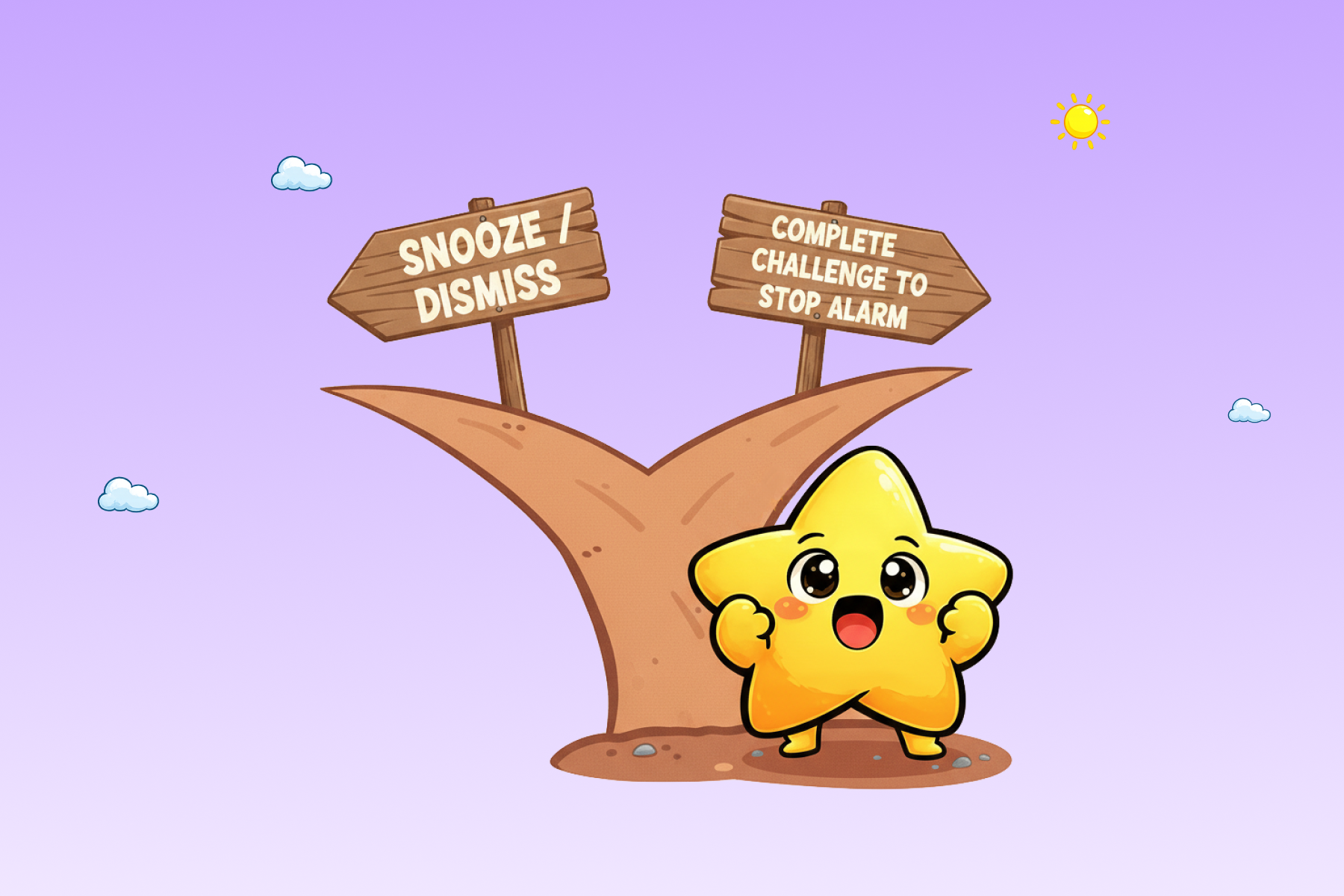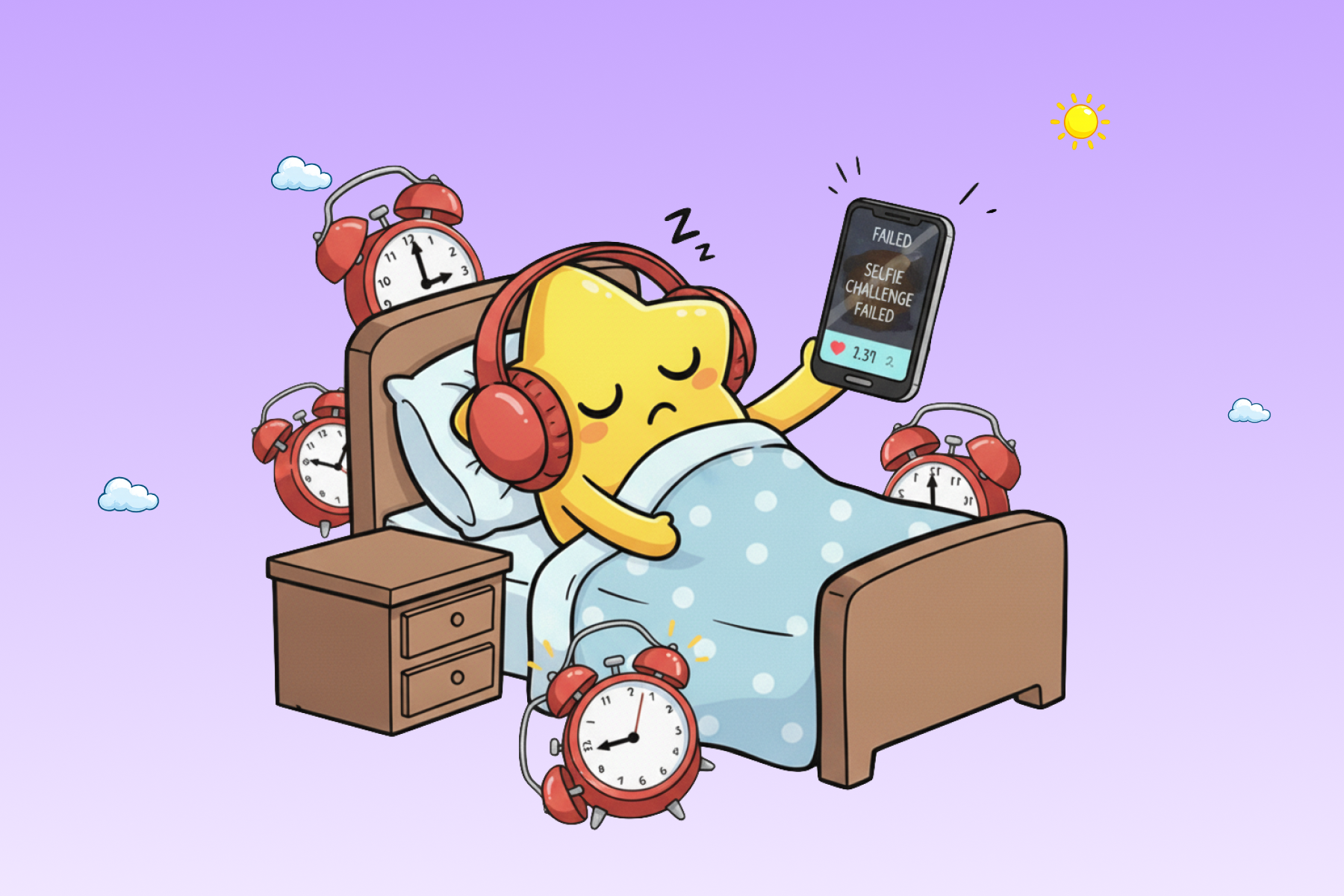
Seven alarms. Each one a little negotiation with future-me.
Future-me consistently lost.
The 6:00 AM alarm was aspirational: the version of the morning where I go for a run, make real coffee, read something that isn't my phone. The 6:15 was the real target. The 6:30 was the backup. The 6:45 was the panic. By 7:00 I'd stopped checking.
Somewhere between the fourth and fifth alarm, I made a decision I have no memory of making. The day had already started badly before it started at all.
If this sounds familiar, you're not disorganized. You're not lazy. You're losing an argument with your own neurobiology and you've been given completely wrong advice about how to win it.
"Just set one alarm and get up." Sure. And just don't eat sugar. And just go to bed earlier. The advice is technically correct and practically useless, because it treats a biological problem like a motivation problem.
Here's what's actually happening and what actually works.
what the research actually says about snoozing
The standard line on snoozing is that it fragments your sleep and makes grogginess worse. The research is more interesting than that.
A University of Notre Dame study published in the journal SLEEP (Mattingly et al., 2022) surveyed 450 full-time employees and found that 57% were habitual snoozers. These weren't teenagers or people with chaotic schedules - they were white-collar workers with advanced degrees. The lead researcher's conclusion was blunt: "So many people are snoozing because so many people are chronically tired."
A follow-up study from Stockholm University (Sundelin et al., 2024, Journal of Sleep Research) went further: 30 minutes of snoozing in habitual snoozers actually improved or didn't affect performance on cognitive tests directly upon waking, compared to abrupt waking. It also prevented waking from slow-wave sleep - the deepest, hardest-to-rouse-from stage. Habitual snoozers slept slightly shorter overall and felt more drowsy in the morning, but the snoozing itself wasn't the cause of those outcomes.
Here's what both studies confirm: snoozing is a symptom, not the problem. It's your body's response to insufficient or insufficient-quality sleep. Telling someone to stop snoozing without fixing the night is like telling someone to stop limping without looking at their leg.
The issue isn't the snooze button. It's what drove you to need it.
6 things that actually help
1. move your phone across the room
This is the most commonly cited advice, and it does work - to a point. Physical friction reduces automatic dismissal. When dismissing the alarm requires getting out of bed, you've introduced one small obstacle between sleep and silence.
The limitation: for moderate to heavy sleepers, it's not always enough on its own. Walking across the room, turning off the alarm, and walking back to bed is a sequence some people complete in a near-unconscious state. It's a useful layer, not a complete solution.
what makes it more effective: pair it with something that keeps you out of bed once you're up. A glass of water on your desk. A light switch you have to hit. Any reason to stay vertical for 90 seconds.
2. set one alarm, not seven
Seven alarms don't create seven opportunities to wake up. They create one opportunity, and six chances to dismiss things early.
Multiple alarms train your brain that the first signal is a suggestion. The precedent you establish over weeks of hitting dismiss is that another alarm is always coming - so the first one requires no real decision. By alarm four, the dismissal is fully automatic.
One alarm, placed away from reach, forces the first alarm to be the real one. It's uncomfortable to set up. It works.
3. fix the night first
This is the one most snooze-advice articles skip over, and it's the most important.
The Notre Dame data was clear: chronic snoozing is downstream of chronic tiredness. If you're sleeping 6 hours because you're on your phone until 1 AM, no morning intervention will fix the problem sustainably. You can move your phone across the room, set challenge alarms, and build morning identity - and you'll still hit snooze, because you're genuinely exhausted and your body is right to want more sleep.
Late-night doomscrolling is the single largest behavioural driver of sleep debt for people under 35. Melatonin suppression, delayed sleep onset, truncated REM - the night explains most of the morning. Fix that first.
If you want a number for what you're working with, the lumi sleep debt calculator takes 90 seconds to run.
4. use light immediately
Your circadian rhythm anchors partly to light. Within the first few minutes of waking, bright light begins suppressing residual melatonin and signals your body that the sleep phase is over. This is the mechanism behind sunrise alarm clocks - they work, particularly for people who wake near their natural wake time.
You don't need a sunrise alarm to use light. Turn your overhead light on the moment your alarm fires. Open your blinds before you check your phone. The light exposure starts the neurochemical transition that the sound of an alarm cannot.
This combines effectively with getting out of bed: once you're in a lit room, the melatonin clearance is happening whether or not you feel awake.
5. put a physical task between you and silence
A standard alarm offers a binary: dismiss or snooze. Both require almost no engagement. A challenge alarm changes the structure: the alarm doesn't stop until you've completed something that requires real wakefulness.
Walking 30 steps activates your body in a way a tap can't. A camera face verification requires you to be upright, lit, and eyes open - a state that's not achievable lying in bed. A math problem solved at 6 AM is less cognitively demanding than the same problem at noon, but it's more demanding than pressing a button.
The reason this works isn't psychological - it's neurological. Physical engagement activates the executive function brain regions that sound alone cannot reliably reach during sleep inertia. Why you can't wake up in the morning covers the mechanism in detail.
This is what lumi's wake-up challenges do. Not as a gimmick, but as a structural answer to the same problem that seven alarms try and fail to solve with volume.
6. anchor a morning identity, not a morning routine
James Clear's Atomic Habits makes a distinction that matters here: outcome-based habits ("I want to wake up at 6:30") fail more often than identity-based habits ("I'm someone who wakes up at 6:30").
The difference is where the motivation lives. Outcome habits rely on daily willpower. Identity habits rely on self-concept - you do it because it's who you are, not because you decided to today.
The practical application: stop optimising your morning routine before you've established your morning identity. The cold shower, the journaling, the workout - none of it matters if the alarm is still a negotiation. Commit to the get-up first, as a fixed fact about yourself, not a daily decision. Everything else follows from that.
The votes accumulate. If you get up on the first alarm three mornings in a row, you have evidence that you're someone who does that. By week three, the snooze feels inconsistent with who you are.

what doesn't work
just putting the phone away without a structural replacement. The phone being elsewhere removes one thing. It doesn't add anything that keeps you awake once you've turned the alarm off. Many people walk across the room, silence their alarm, and return to bed automatically.
willpower at 6 AM. This is not a resource. Sleep inertia impairs the prefrontal cortex - the region responsible for decision-making and impulse control - for up to 30 minutes after waking. You are, neurologically, not your best decision-making self in the moment the alarm fires. Strategies that depend on willpower at that moment will fail most mornings.
gradual morning routine building before the wake-up is fixed. You cannot build a morning routine on a foundation of variable wake times and seven-alarm negotiations. The routine can only start once the get-up is consistent.
the whole lumi design in one paragraph
Lumi removes the negotiation. The night before, your apps lock at your set bedtime - so the snooze habit's primary cause (sleep debt from late-night scrolling) gets addressed before the morning arrives. In the morning, there's no snooze button. There's a challenge - face verification, squats, push ups, walking steps, a math problem, an emoji match. You complete it. The alarm stops. That's the whole relationship.
The alarm that requires you to prove you're awake is structurally different from an alarm that asks you to stay awake. It's the difference between a lock and a nudge.
turn your alarm into a contract. try lumi free for 7 days →