Most morning routines fail the night before.
Not because the routine is bad. Not because you lack discipline. But because the whole architecture: the cold shower, the journaling, the no-phone rule, the workout before 7 was designed for someone who woke up refreshed. And you didn't wake up refreshed. You woke up groggy, hit snooze three times, and skipped all of it.
The routine wasn't broken. The wake-up was broken. And the wake-up was broken because of what happened the night before: the late scroll, the one more episode, the 1 AM rabbit hole that didn't feel like a choice at the time.
This is the part every morning routine article skips. Not because the writers don't know it. Because "protect your evenings" is less photogenic than a 5 AM ice bath.
Here's what the science actually says.
the real problem: your morning routine starts the night before
Every productive morning routine you've ever seen: the cold exposure, the meditation, the no-phone hour, the workout has one invisible prerequisite: you wake up having slept enough, at the right phase of your sleep cycle, without the accumulated deficit of a week of 2 AM bedtimes.
Without that, the routine is just a list of things you'll skip.
The science is consistent on this. Your circadian rhythm - the internal 24-hour clock that governs alertness, hormones, body temperature, and mood - doesn't reset with willpower. It resets with light, timing, and consistency. No morning habit overrides a broken sleep foundation. Not journaling. Not cold water. Not supplements.
This means building a morning routine that works is actually a two-part problem: what happens at night, and what happens when you wake up. You can't solve one without the other.
If you want to understand what late-night scrolling specifically does to that foundation, doomscrolling and sleep: what it actually does to your brain covers the melatonin and REM side in detail.
part one: the night - protect what makes the morning possible
lock the phone. protect your melatonin.
Your body begins preparing for sleep about two hours before your actual bedtime. Melatonin starts rising. Body temperature drops. The brain shifts into wind-down mode. This process - dim-light melatonin onset - is the biological prerequisite for falling asleep at a reasonable time.
Screen light, and specifically the blue-wavelength light emitted by phones, suppresses melatonin significantly. When you scroll until midnight, you aren't just passing time. You're actively blocking the chemical signal your body needs to transition into sleep. When you finally put the phone down, you don't feel sleepy yet - because your brain's chemistry hasn't shifted yet. Sleep onset is delayed by 60 to 90 minutes. And because your alarm fires at the same time regardless, the sleep you lose comes from the REM-heavy cycles at the end of the night.
This is why the morning version of you feels like a different, worse person. It's because neurologically, you are. Your prefrontal cortex - the part responsible for motivation, decision-making, and following through on things like morning routines - runs on adequate REM sleep. Less REM means less of you available to execute anything.
The fix at the night end is structural, not motivational. If you rely on willpower to put the phone down, you'll lose. Willpower is at its lowest at midnight. What works is removing the choice before you need to make it - locking the apps that keep you up at the time you've decided on, before the moment of temptation arrives.
wind down, but briefly
Wind-down rituals are effective, but they don't need to be elaborate. Research on pre-sleep cognitive arousal shows that the main obstacle to sleep onset isn't a missing meditation practice - it's an activated mind that hasn't discharged the day.
Three to five minutes of a brain dump (writing out everything still running in your head), or one slow breathing cycle (inhale four seconds, hold, exhale longer), is enough to reduce that arousal. You don't need 45 minutes of Headspace. You need a signal to your nervous system that the processing is done for today.
The most important variable isn't which wind-down ritual you use. It's consistency - doing something, at the same time, every night. That repetition becomes a conditioned cue. Your brain starts initiating sleep onset in response to the ritual itself.
part two: the morning - three things that actually compound
protect the cortisol awakening response
Most people have never heard of the cortisol awakening response (CAR), but it runs the first hour of your day whether you know about it or not.
Within the first 30 to 45 minutes after waking, cortisol levels surge by 50 to 75%. This rapid cortisol burst at the start of the active phase has been proposed to prepare the organism for the challenges of the upcoming day - mobilising glucose for the brain, increasing alertness, supporting immune function, and helping shake off sleep inertia. An individual's CAR predicts anticipated workload, cognition, and emotion, while an abnormal CAR is often linked to stress-related conditions such as anxiety and depression.
You can't force a better CAR. But you can stop sabotaging it.
The things that blunt your cortisol awakening response: waking up in the middle of a deep sleep cycle (which happens when your bedtime is inconsistent), chronic sleep deprivation, and - critically - the stress cascade triggered by opening your phone the moment you wake up. The abrupt dopamine spike from phone use disrupts stable cortisol patterns, which can then negatively impact energy levels, mood, and focus throughout the day.
The things that support it: a consistent wake time, natural or bright light in the first few minutes, water (cortisol needs hydration to function properly), and - counterintuitively - not immediately flooding your sensory system with inputs.
Give the CAR 20 minutes to do its job before you introduce notifications, email, or social media. That window is where your natural alertness comes from. Don't override it with artificial stimulation before it's finished.
get light within 30 minutes
Light is the most powerful signal your circadian clock receives. Bright morning light causes a phase advance - getting sleepy earlier in the evening and waking up earlier in the morning. This isn't a supplement or a hack. It's fundamental biology.
Morning light exposure within 30 minutes of waking - even through a window, even on an overcast day - starts advancing your circadian clock toward an earlier sleep window tonight. Repeated daily, it reinforces your rhythm. Skipping it, especially in combination with bright screens at night, is one of the main reasons people feel perpetually behind their own schedule.
This is why getting vertical and moving toward a window or outside in the first 20 minutes of your morning matters more than most of what comes after it. The light isn't incidental. It's the anchor.

don't front-load your dopamine
This is the concept behind the "low dopamine morning routine" trend, and the science behind it is straightforward.
Dopamine governs motivation and reward. Our experience of pleasure at any given time is relative to our baseline rate and relative to what has come before. If you get a dopamine release from playing games on your phone all morning, then eat something tasty for morning tea, you may not experience the same level of fulfilment or enjoyment that you would have had you not played those games. The brain works hard to regulate itself and won't allow you to be in a constant state of dopamine highs.
Using your phone in the morning can elevate your dopamine baseline - the level of dopamine your brain expects to receive in order to feel pleasure or satisfaction. When you front-load social media, news, and notifications first thing, you're borrowing from your motivational reserves before the day has started. The work you need to do later - which requires sustained effort without instant feedback - feels harder than it otherwise would.
The low dopamine morning approach isn't about depriving yourself. It's about not spending your most valuable neurochemical resource on the least valuable input. Save the scroll for after you've done the thing that matters.
what the influencers get wrong
5 AM is not magic
The "5 AM club" concept is popular because consistency is real and waking early gives you quiet time before the world starts. Both of those things are true. What isn't true is that 5 AM specifically holds some neurological advantage.
Chronotype research is clear: sleep timing preferences are substantially biological. Night owls aren't lazy - they have a genuine circadian phase delay. Subjects who had a greater phase delay in a dim environment had a greater phase advance by light exposure the following morning, which means chronotype affects how strongly your clock responds to resetting cues. Forcing a 5 AM wake time on a confirmed night owl, without addressing the bedtime that makes it sustainable, produces sleep deprivation - not productivity.
What matters isn't waking at 5 AM. It's waking at a consistent time, aligned as closely as possible with your natural sleep window, and protecting that alignment with a fixed bedtime. A consistent 7:30 AM - backed by an 11:30 PM bedtime you actually keep - is more neurologically sound than a chaotic 5 AM built on 5 hours of sleep.
the length of the routine doesn't predict the outcome
An hour-long morning routine and a 15-minute morning routine produce equivalent outcomes if the 15-minute version is consistently executed and the hour-long version is skipped four days a week. Habit research consistently shows that frequency and consistency matter more than duration.
The anchor habit - one consistent first action every morning, done before anything else - is what makes a routine stick. It doesn't need to be impressive. It needs to be reliable. Drink water. Stand in light. Complete one challenge that gets you out of bed. The brain builds routines around anchors, not aspirations.
how lumi fits into this
lumi isn't a morning routine app. It's the system that makes a morning routine possible.
The night side: lumi locks the apps that suppress your melatonin at the bedtime you've set. Your phone has a bedtime whether you remember to enforce it or not. That's the melatonin protection, the reduced cognitive arousal before sleep, and the REM sleep you need to function in the morning.
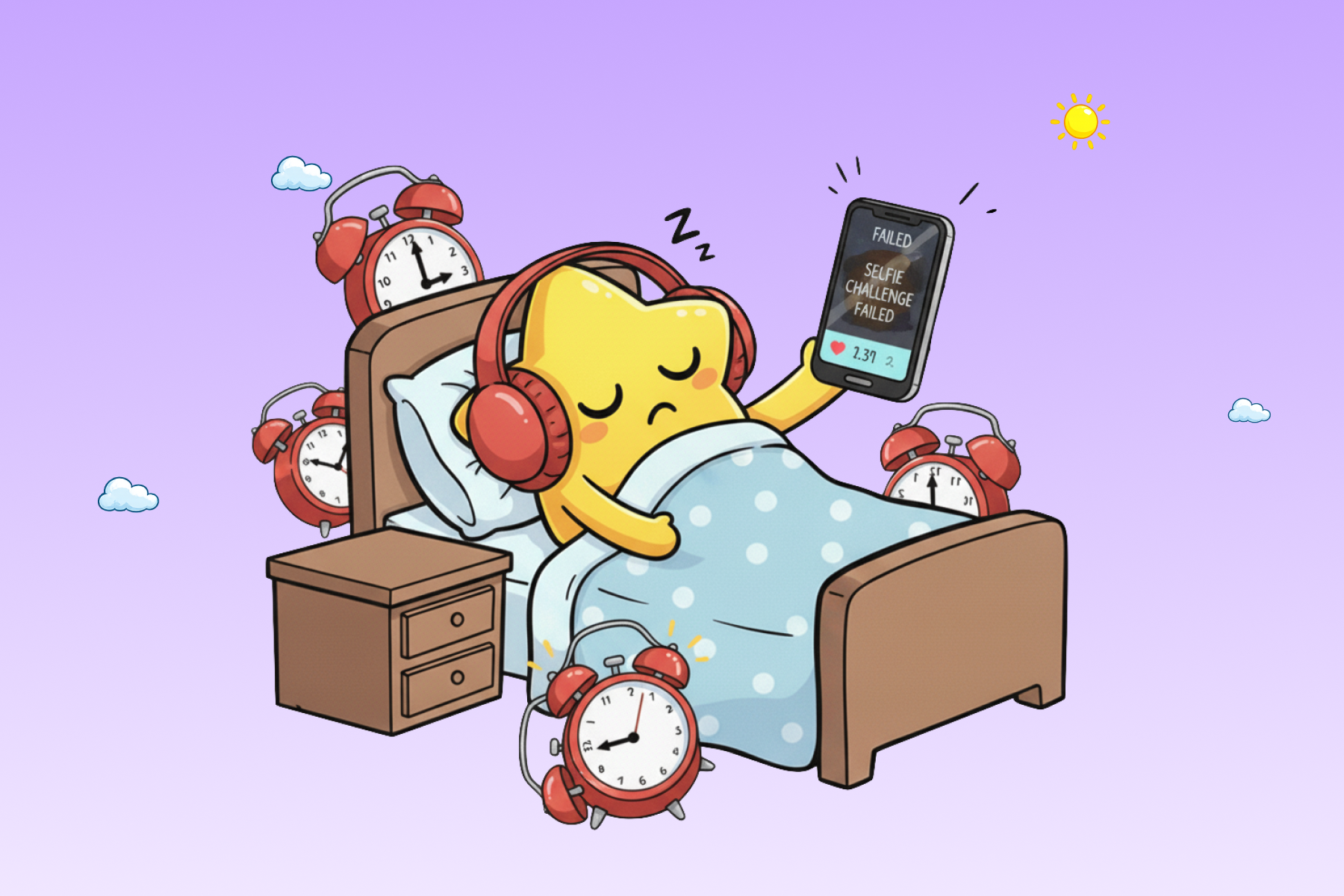
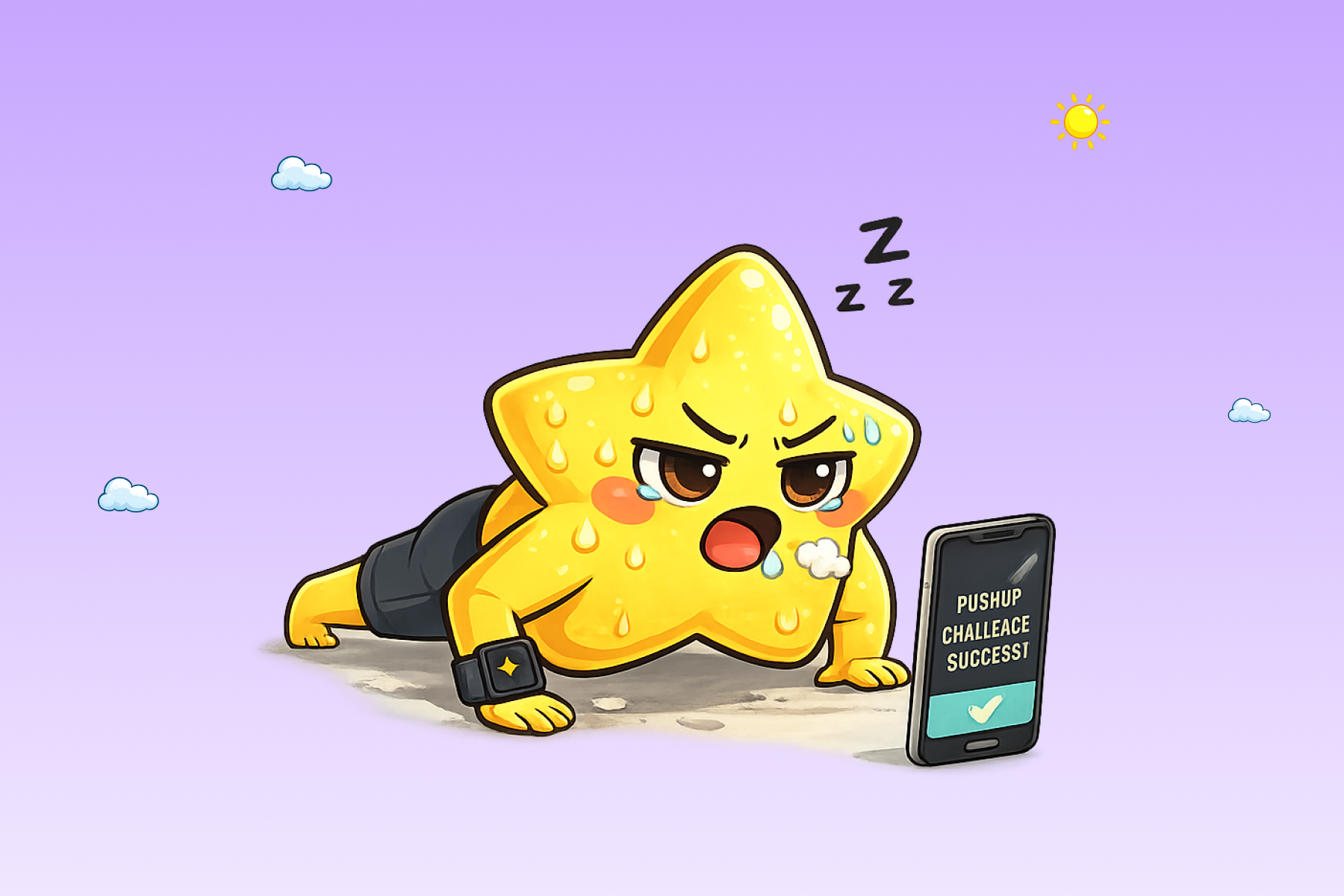
The morning side: lumi's wake-up challenges get you vertical and physically present before you're allowed to open anything. You can't fake walking thirty steps from bed. You can't smile for the camera with your eyes closed. By the time the alarm is dismissed, the hard part is done - you're up, you're lit, and your CAR has started. The rest of the routine runs on top of that.
lumi is a morning routine system, not just an alarm. It controls the night that enables the morning. How the bedtime lock and wake challenges work in practice →
Build a morning you don't hate. Try lumi free for 7 days →