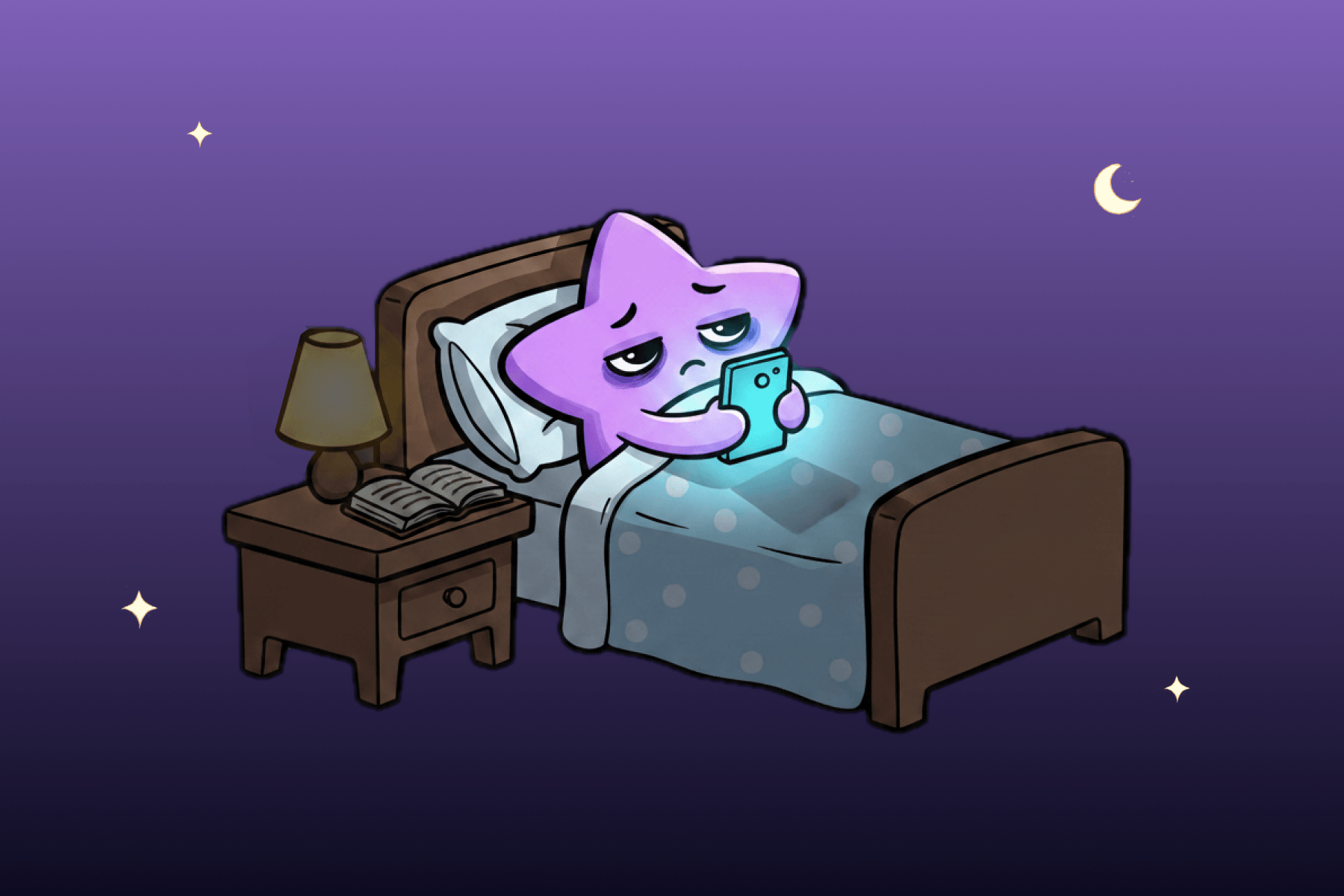
I told myself I'd check one notification. At 12:36 AM, I had read quite a few X posts, watched videos about topics I'd never think about in daylight, and made tomorrow measurably harder - for no real reason. That's not a character flaw. That's engineering.
Your phone is not neutral at midnight. The app you just opened spent billions of dollars making sure the next five minutes feel necessary. Self-control might not beat a billion-dollar algorithm. Structural constraint does.
Here's what actually stops doomscrolling at night - backed by research.
why doomscrolling gets worse at night
Late-night scrolling isn't about being weak. Your prefrontal cortex - the part that makes good decisions - is suppressed when you're tired. Meanwhile, your brain's reward system stays fully online, firing at every notification, thumbnail, and auto-playing video.
The algorithm knows this. It's optimised for the 1 AM version of you, not only the 9 AM one. It doesn't care that you have work tomorrow. It only knows you haven't left yet.
The American Academy of Sleep Medicine's 2026 survey found that 38% of adults sleep worse because of pre-bed scrolling and that number climbs to 46% for adults aged 18-24. This isn't a personal failing. It's a predictable outcome of handing a dopamine machine to an exhausted brain and expecting willpower to hold the line.
why willpower fails every time
You've probably tried the "just put your phone down" approach. You've set app limits. You've turned on Do Not Disturb. You've told yourself tonight will be different.
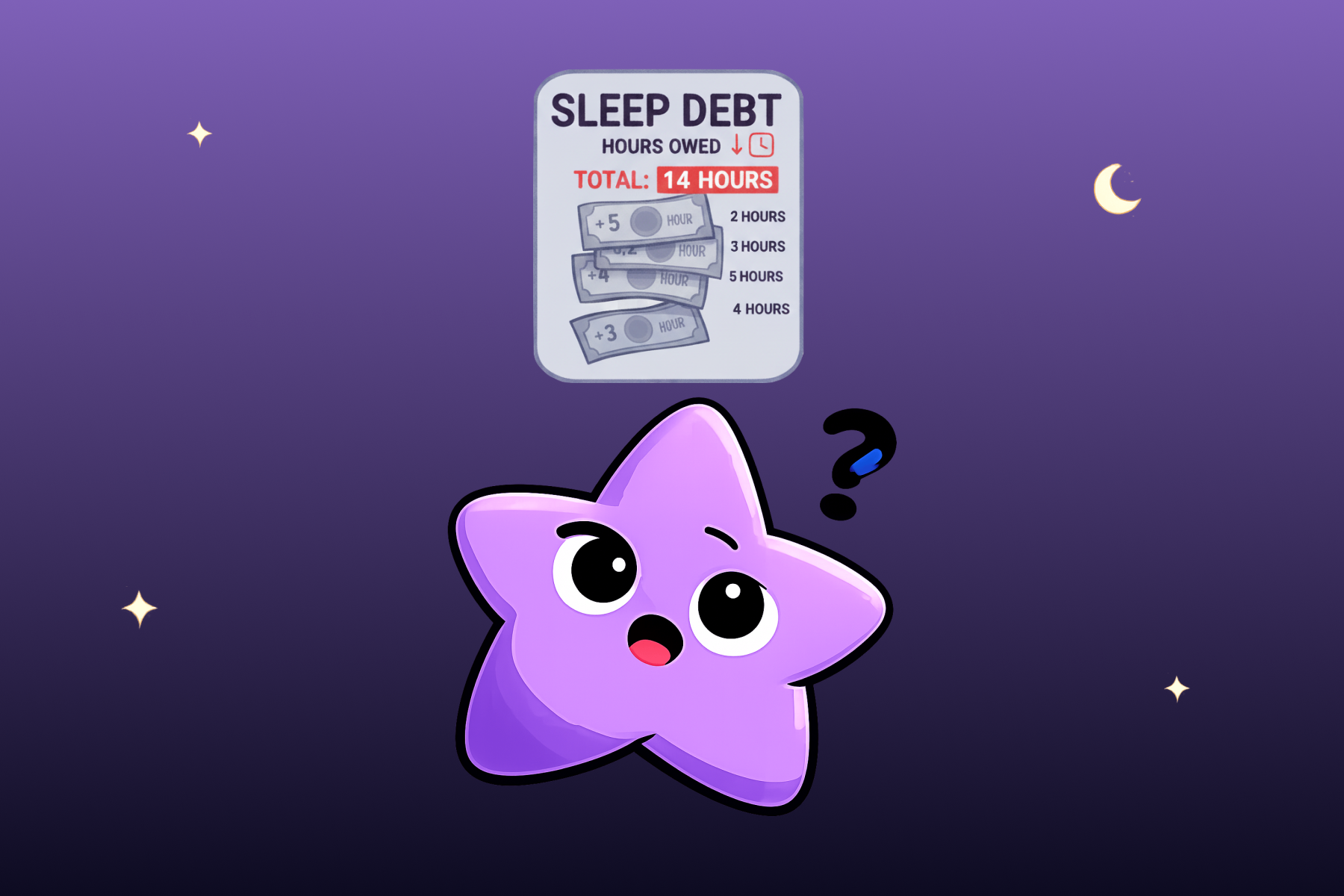
The problem isn't discipline. The problem is that discipline requires cognitive resources and by midnight, yours are depleted. Every decision you've made today has quietly eroded your capacity to make another one. This is decision fatigue, and it's the reason your "just a few minutes" becomes your 3 AM.
Willpower is a finite resource. The apps you're trying to resist are engineered to be infinite. They have entire teams of engineers optimising for your engagement at exactly the moment you're least equipped to resist.
Expecting your tired self to win this fight every single night is not a strategy. It's a setup.
what actually works: structural intervention
Studies found that adding structural barriers to app access reduced openings significantly. Not reminders. Not timers. Not intentions. Structural barriers - friction that exists before you make the decision, so the decision is effectively already made.
This is the research consensus: the most effective interventions don't fight your impulses in the moment. They change the environment before the moment arrives. Structural constraint, not motivation, is what the evidence actually supports.
1. set a hard bedtime lock (not a soft timer)
App usage timers give you an override button. At midnight, you will press it. Every time. Without exception.
A hard bedtime lock removes the override entirely. It activates at a time you set when you're calm and sensible - 10 PM, say and it doesn't negotiate with the midnight version of you. The decision is already made by the person who actually knows better.
This is the single most evidence-consistent intervention for late-night scrolling. Not more willpower - a structural wall built before you need it.
Try lumi's bedtime lock - no willpower required after setup. →
2. put your phone physically out of reach
Research on proximity is stark: phones on bedside tables correlate with significantly higher nighttime use compared to phones charged in another room. The "just in case" logic doesn't hold - nothing genuinely urgent enough to justify sacrificing your sleep quality happens between midnight and 7 AM.
Put it in the hallway. In the kitchen. Anywhere that requires you to stand up, walk across a room, and consciously decide. That physical friction is enough to break the automatic reach.
3. replace the scroll with genuine decompression
Scrolling isn't laziness - it's your brain looking for a way to land after a cognitively exhausting day. The phone has made itself the path of least resistance for that decompression. The solution isn't to eliminate decompression. It's to make a better alternative equally accessible.
A ten-minute breathing exercise, ambient sound, or a low-stimulus audiobook clears the same mental exhaust without keeping your brain lit up at the exact moment it needs to slow down. The replacement doesn't need to be impressive. It just needs to be lower-friction than the structural barrier you've added to scrolling.
Looking for specific alternatives? 15 things to do instead of doomscrolling - from easy swaps to structural fixes →
the fix that doesn't require the midnight you
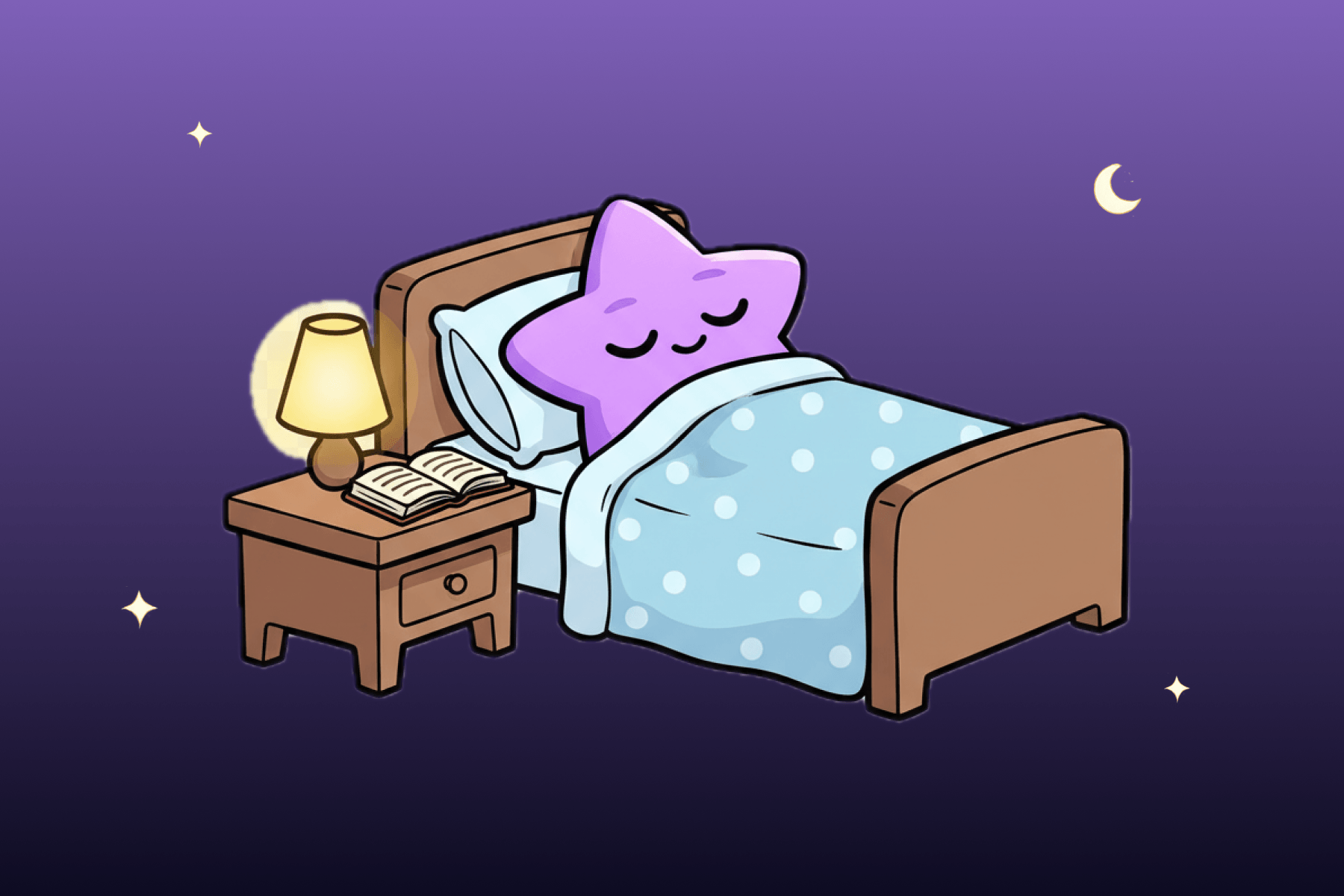
You don't negotiate with gravity. You wear a seatbelt. Sleep protection works the same way - not by making you want to stop scrolling, but by making scrolling structurally unavailable at the moment you'd most regret it.
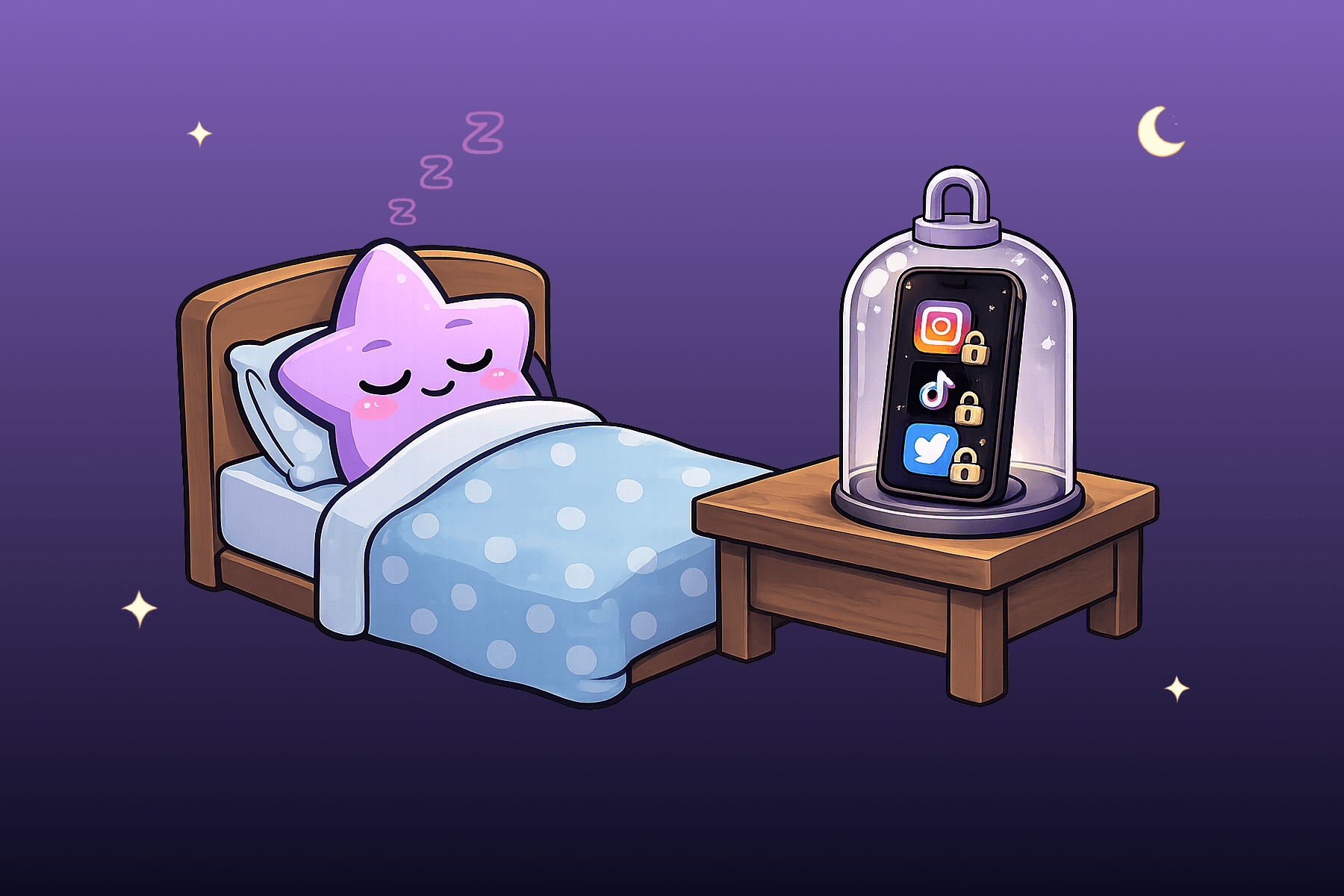
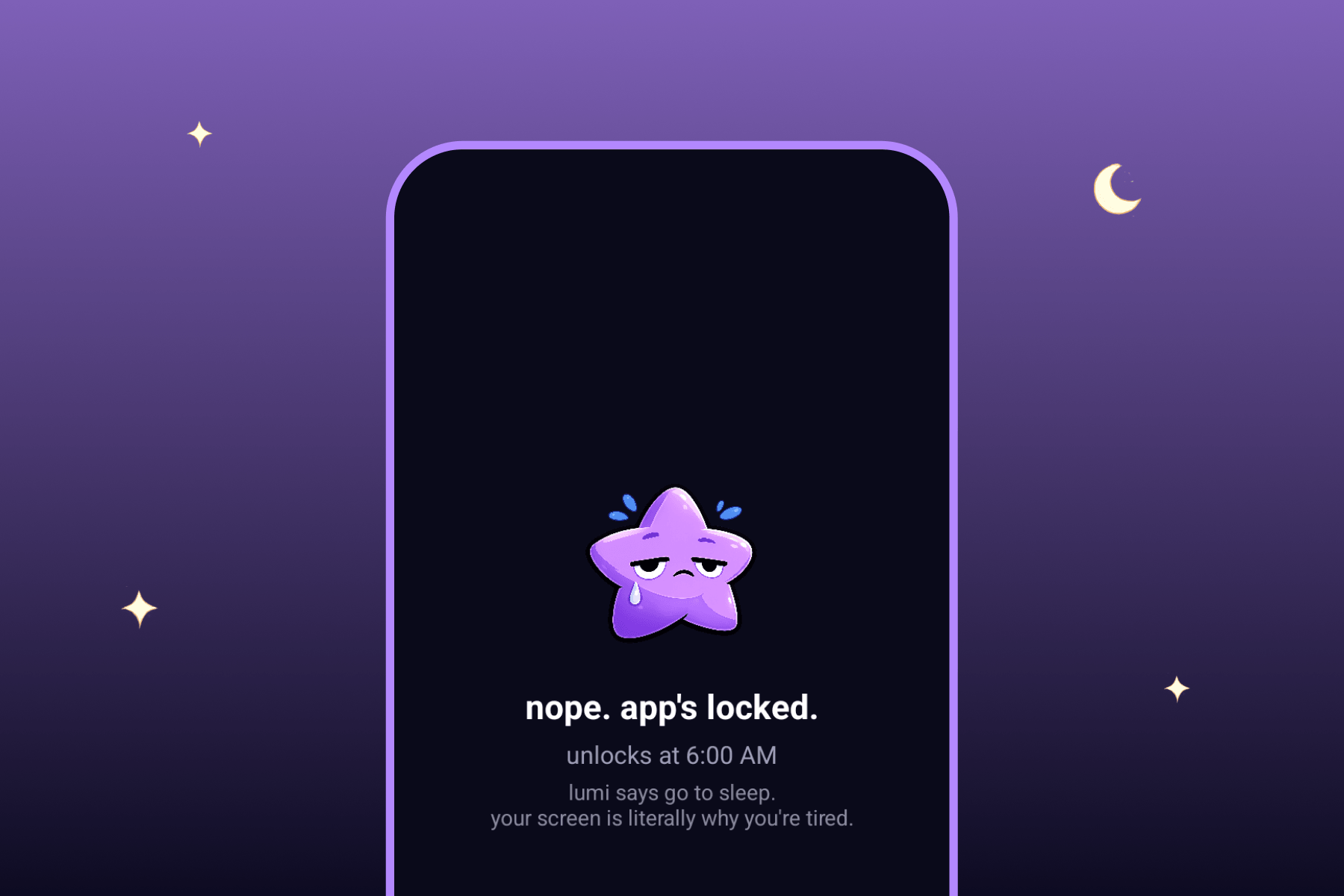
lumi's bedtime lock is built on this exact principle. You set a lock time when you're calm, rested, and sensible. At that time, the apps that eat your sleep become inaccessible. Not nudged. Not reminded. Locked. The 7 PM version of you - the one reading this right now - protects the 3 AM version.
And for the moments when you test it anyway - because you will - lumi's lock screen speaks in the voice of someone who isn't going to pretend your midnight reasoning is sound.
For a complete look at what late-night scrolling actually does to your sleep chemistry, read the science behind doomscrolling and sleep →
stop negotiating with your phone at midnight
Here's the shift: stop trying to want to put your phone down, and start making sure you structurally can't pick it up when it counts.
The 38% of adults sleeping worse because of pre-bed scrolling aren't sleeping worse because they're weak. They're sleeping worse because nothing in their environment is built to help them. One structural change - a bedtime lock you can't dismiss in a tired moment - outperforms every digital wellness tip you've ever bookmarked and never used.
Set the decision now. Let the 7 PM version of you protect the 3 AM version.