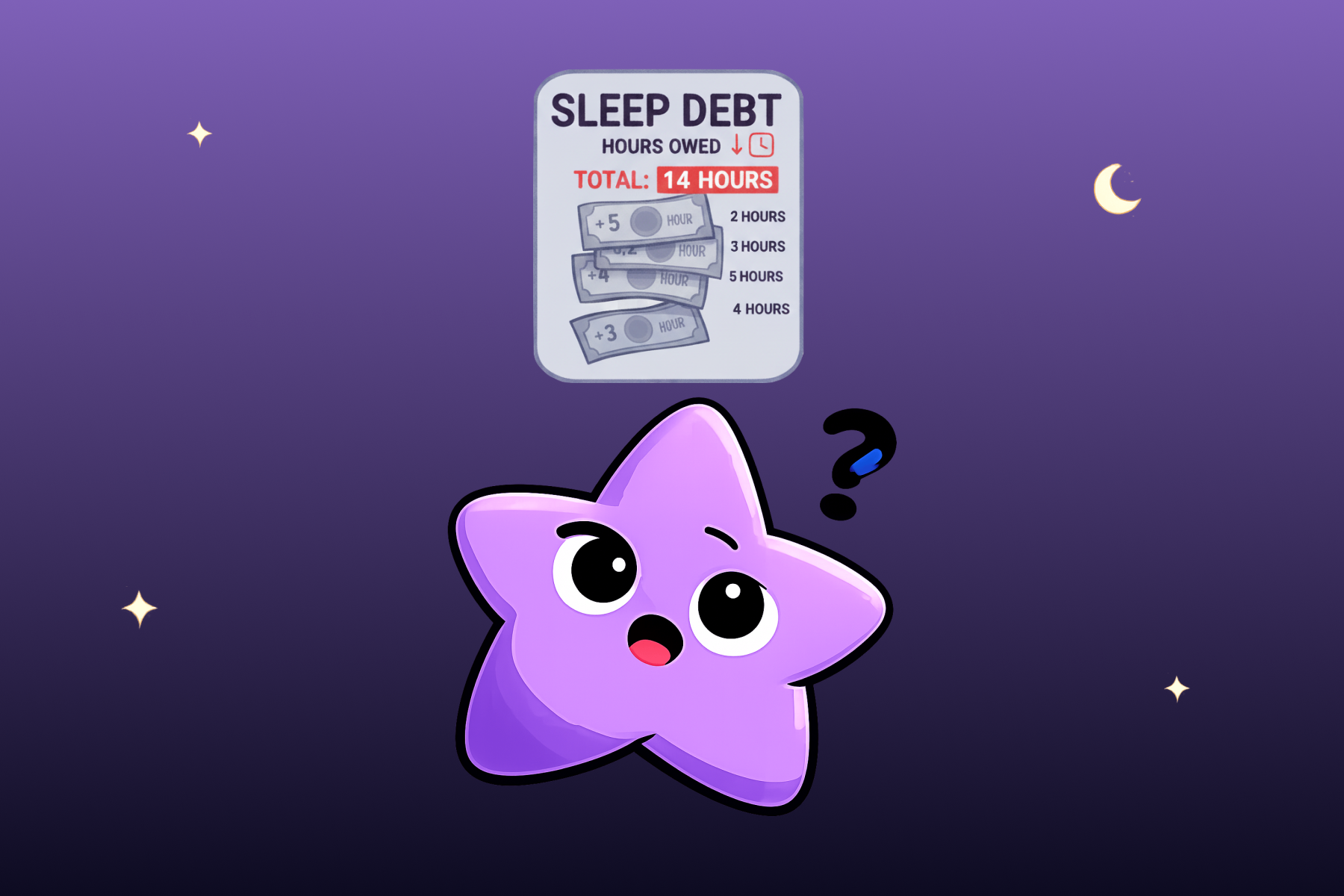
I've read every "fix your sleep schedule" article. They all end at the same place: just go to bed earlier. Set an alarm. Don't sleep in on weekends.
Technically correct. Practically useless. If you could just go to bed earlier, you would have done it two months ago.
The real obstacle to shifting your sleep schedule isn't motivation - it's biology. Your circadian rhythm is not a preference. It's a clock, running on a 24-hour cycle entrained by light, temperature, and behaviour. You can't override it by deciding to sleep at 10 PM. But you can shift it deliberately, over time, using mechanisms that work with the biology instead of demanding it obey you.
Here's what actually works, starting with the least miserable approach.
Why Your Sleep Schedule Drifted in the First Place
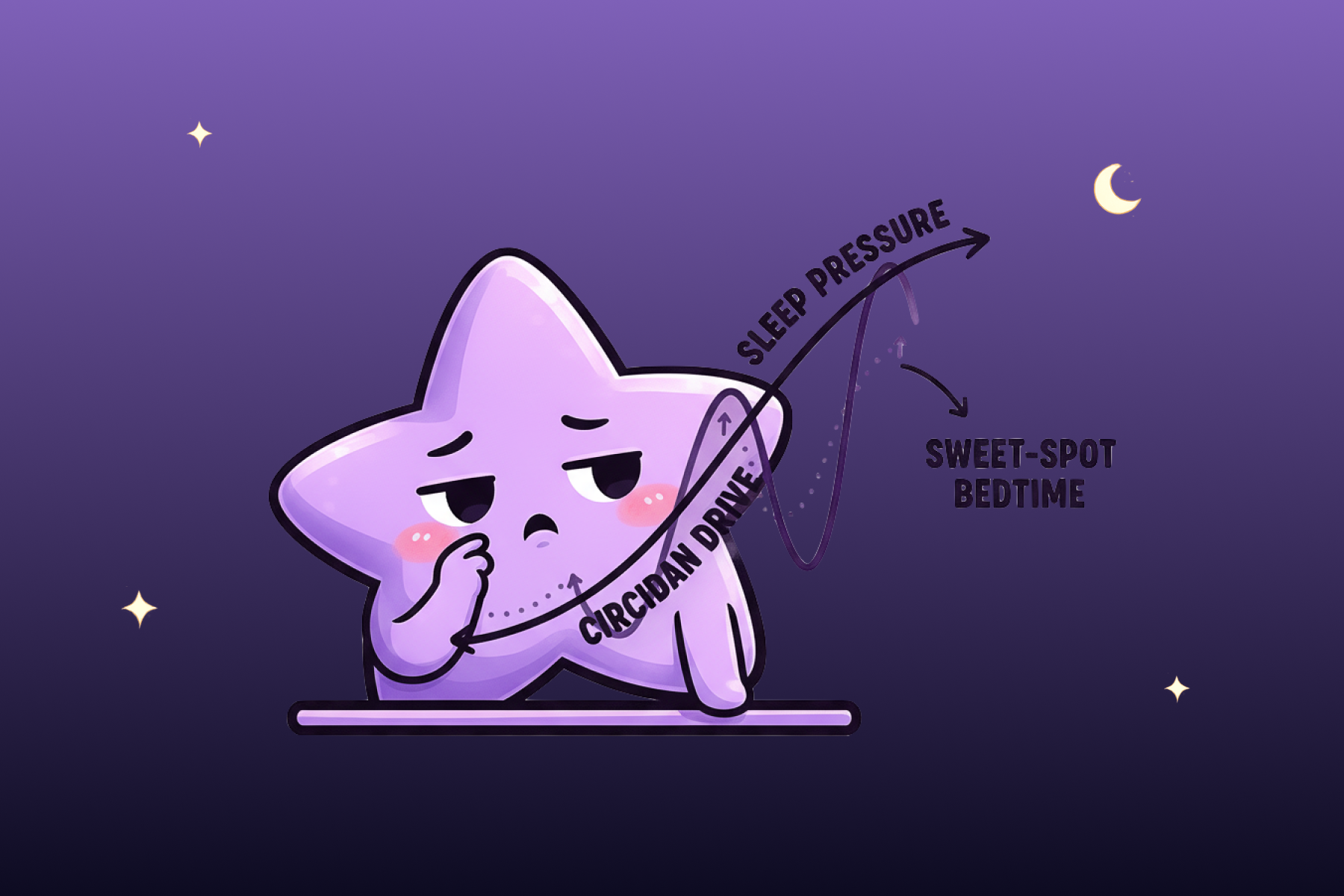
Your sleep timing is controlled by two interacting systems.
The first is circadian drive - your biological clock, which produces a rhythm of alertness and sleepiness across the 24-hour day regardless of when you slept last. The second is sleep pressure - the accumulation of adenosine, a chemical byproduct of brain activity that builds throughout wakefulness and clears during sleep. The longer you're awake, the more adenosine accumulates, and the stronger your drive to sleep becomes.
When both systems align, sleep happens naturally. When they're misaligned - when your circadian clock says "alert" at the same time sleep pressure is high - you lie awake despite being tired. This is the experience of trying to sleep at the wrong phase of your circadian cycle.
When you stay up late regularly, both systems adjust to the new schedule. Your circadian rhythm shifts to a later phase over days. After a week of 2 AM bedtimes, your body genuinely isn't ready to sleep at 10 PM - not because you lack discipline, but because your clock has updated its calibration.
The additional layer for most people: phones. Late-night screen use actively suppresses melatonin - the hormone that signals nighttime - delaying the onset of sleepiness and anchoring your clock toward a later schedule. Your sleep schedule and your scrolling habits are not independent variables.
This is why "just go to bed earlier" fails. You lie awake, anxious about not sleeping, which elevates cortisol and makes sleep even less likely. The biology hasn't shifted yet. You're trying to sleep in the wrong phase.
The Gradual Shift Method (Most Sustainable)
The most evidence-consistent approach to circadian phase shifting is gradual adjustment: moving your sleep window earlier in small increments, consistently, while reinforcing the new timing with morning light exposure.
Step 1: Find your current actual bedtime. Not what you intend. The time you actually fall asleep, averaged across the past week. This is your starting point - the schedule your biology has calibrated to.
Step 2: Move your bedtime earlier by 15 minutes every few days. If your current bedtime is 1:30 AM, target 1:15 AM for the first three days. Then 1:00 AM. Then 12:45 AM. Continue until you reach your target. The increment is small enough that your melatonin rhythm can follow the schedule, rather than fighting it.
Step 3: Move your wake time simultaneously. Sleep timing shifts as a unit, not just at the bedtime end. If you shift your bedtime earlier by 15 minutes, shift your alarm earlier by 15 minutes too. Your total sleep window stays the same - the whole window moves forward together.
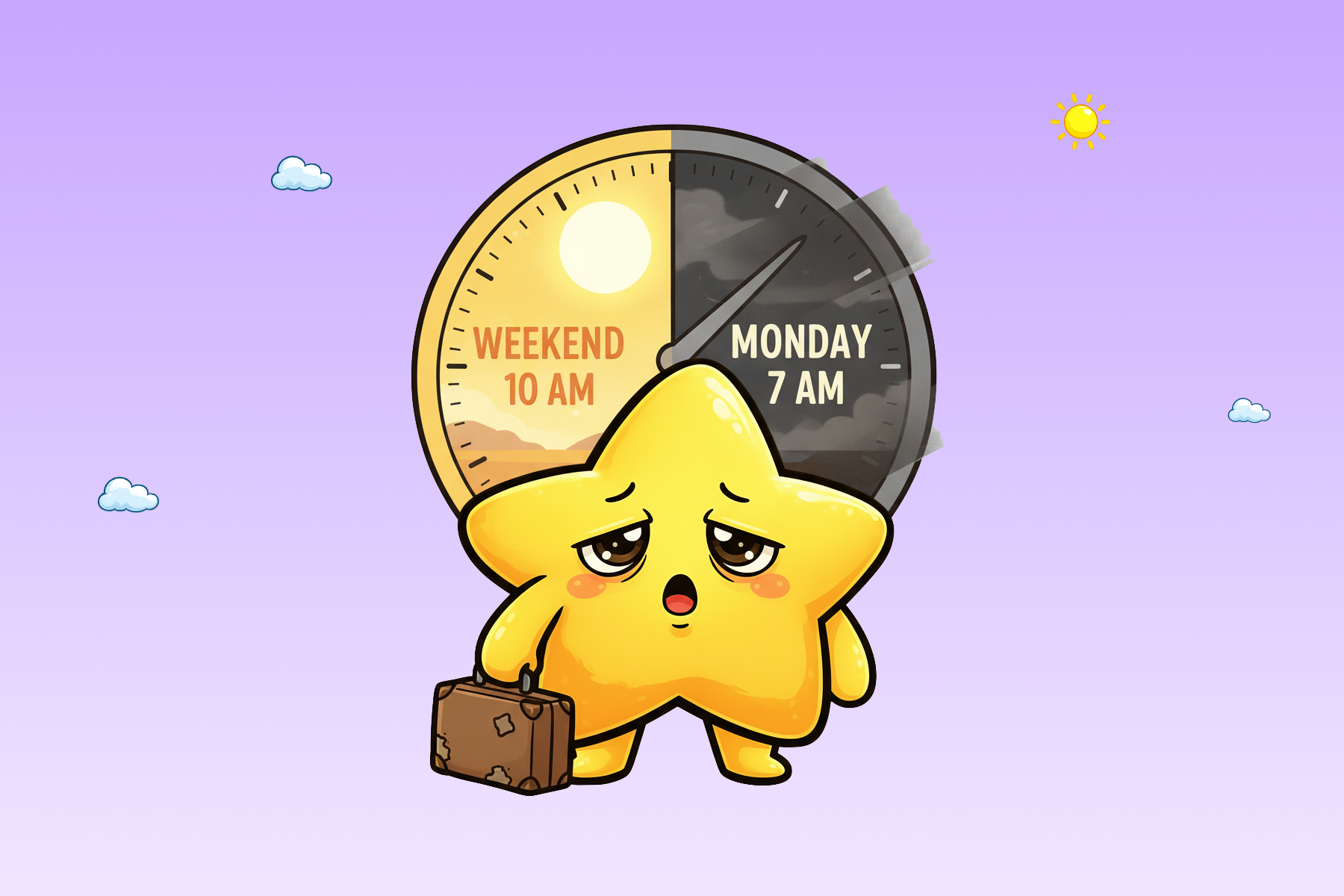
Step 4: Be consistent on weekends. Weekend lie-ins reverse the progress made during the week. Research on social jet lag shows that sleeping in by 1–2 hours on weekends can shift your circadian clock back toward its previous position within 48 hours. The gradual shift requires seven-day consistency to take hold. Allow yourself a maximum of one additional hour on weekends - not two or three.
How Your Phone Fits Into This
Your phone is the most significant external lever on your circadian clock beyond sunlight. Here's how to use it as a tool rather than a liability.
Create a phone cut-off 60–90 minutes before your target bedtime. If your target bedtime is 11:30 PM, your apps should lock by 10:00 PM. The window allows your melatonin to begin rising naturally, without the suppression that screen light produces. This isn't the same as putting your phone face-down - face-down doesn't stop you from picking it back up. A hard bedtime lock removes that option entirely.
lumi's bedtime lock activates at the time you set, automatically, every night. The 7 PM version of you makes the decision. The 11 PM version doesn't get a vote.
Use bright light in the morning to anchor the shift. Bright light immediately after waking is the fastest signal for moving your circadian clock earlier. Open curtains, go outside for 10 minutes, or sit by a window. The morning light tells your biology where the day begins - it's the symmetric counterpart to the evening cut-off. Reduce light at night, increase it in the morning. Both levers point in the same direction.

The Social Jet Lag Problem
If you're making progress during the week but weekends keep undoing it, you're experiencing social jet lag - the mismatch between your biological clock and your social schedule that affects around 70% of students and workers.
The most common pattern: weeknight bedtimes held reasonably consistent, weekend bedtimes drifting 2–3 hours later because the work pressure is gone, the phone use runs longer, and there's no external reason to stop. By Sunday night, your circadian clock has shifted back toward its previous position. Monday morning is brutal. The cycle restarts.
To prevent weekend undoing of weeknight progress:
- Cap weekend wake times at 1–1.5 hours past your weekday target. Extra sleep, but not so much that your clock resets.
- Apply the same phone cut-off on Fridays and Saturdays. The algorithm runs on the same biology as a Tuesday.
- Use the morning light routine on weekends too. Consistency is what trains the clock, not intention.
For more on the social jet lag mechanism and how to address it specifically, see what is social jet lag (and why you feel exhausted every monday).
A Note on the "All-Nighter Reset" Idea
You may have heard the idea of staying awake until your target bedtime to force a rapid schedule reset - the logic being that maximum sleep pressure will guarantee sleep at the new time.
It's worth being direct about this: the evidence doesn't reliably support it as a general strategy, and the risks are real. Research suggests that acute sleep deprivation can actually impair the suprachiasmatic nucleus's (your biological clock's) response to light - the primary mechanism by which the clock resets. Staying up all night may also cause you to crash before your target bedtime rather than at it. And the day of extended wakefulness carries the cognitive costs of acute sleep deprivation: impaired reaction time, poor decision-making, and dangerous drowsiness if you need to drive or operate anything.
The gradual method is slower but doesn't require you to spend a day functionally impaired to make progress. For most people, the cost-benefit calculation on the all-nighter approach doesn't hold up.
The exception: people dealing with clinical-level circadian rhythm disorders sometimes undergo total sleep deprivation as part of structured triple chronotherapy, supervised by a sleep clinician and combined with timed light therapy and melatonin. That is a medical protocol, not something to replicate at home on a Friday.
What to Expect and When
The timeline for circadian phase shifting is not instant and it's not linear. Realistic expectations help.
Days 1–3: Falling asleep at the new time may take longer than usual. Your melatonin hasn't shifted yet - you're trying to sleep slightly ahead of your current biological phase. This is normal.
Days 4–7: Melatonin onset begins adjusting to the new timing. Sleep onset at the target time becomes noticeably easier. Morning waking feels less catastrophic.
Week 2: The new schedule begins to feel like your default. You may find yourself waking slightly before your alarm.
Week 3–4: The schedule has stabilised. Reverting accidentally for one night now feels like the exception rather than the baseline. The old late schedule - if you slip back into it - now feels foreign.
The phone cut-off is the most impactful single variable across this entire period. Every night you scroll past the cut-off time is a night you delay the melatonin adaptation and set the timeline back.
The Tools That Support the Shift
Environmental design consistently outperforms willpower in circadian research. You don't need to do this through intention alone.
Worth using:
- A bedtime app lock (lumi) that automates the cut-off time and doesn't require nightly recommitment
- A daylight lamp for morning light exposure on dark winter mornings
- A sleep tracking app to compare actual sleep timing against your intended schedule
- The lumi sleep schedule fixer tool - enter your current and target bedtime, get a day-by-day adjustment plan
The single most impactful: the bedtime lock. The gradual shift method only works if the phone cut-off is actually enforced. One night of scrolling until 1 AM delays the melatonin suppression recovery, pushes back the adaptation, and sets the schedule.
Make the decision now, at the time you're reading this. Don't negotiate with 11:30 PM.