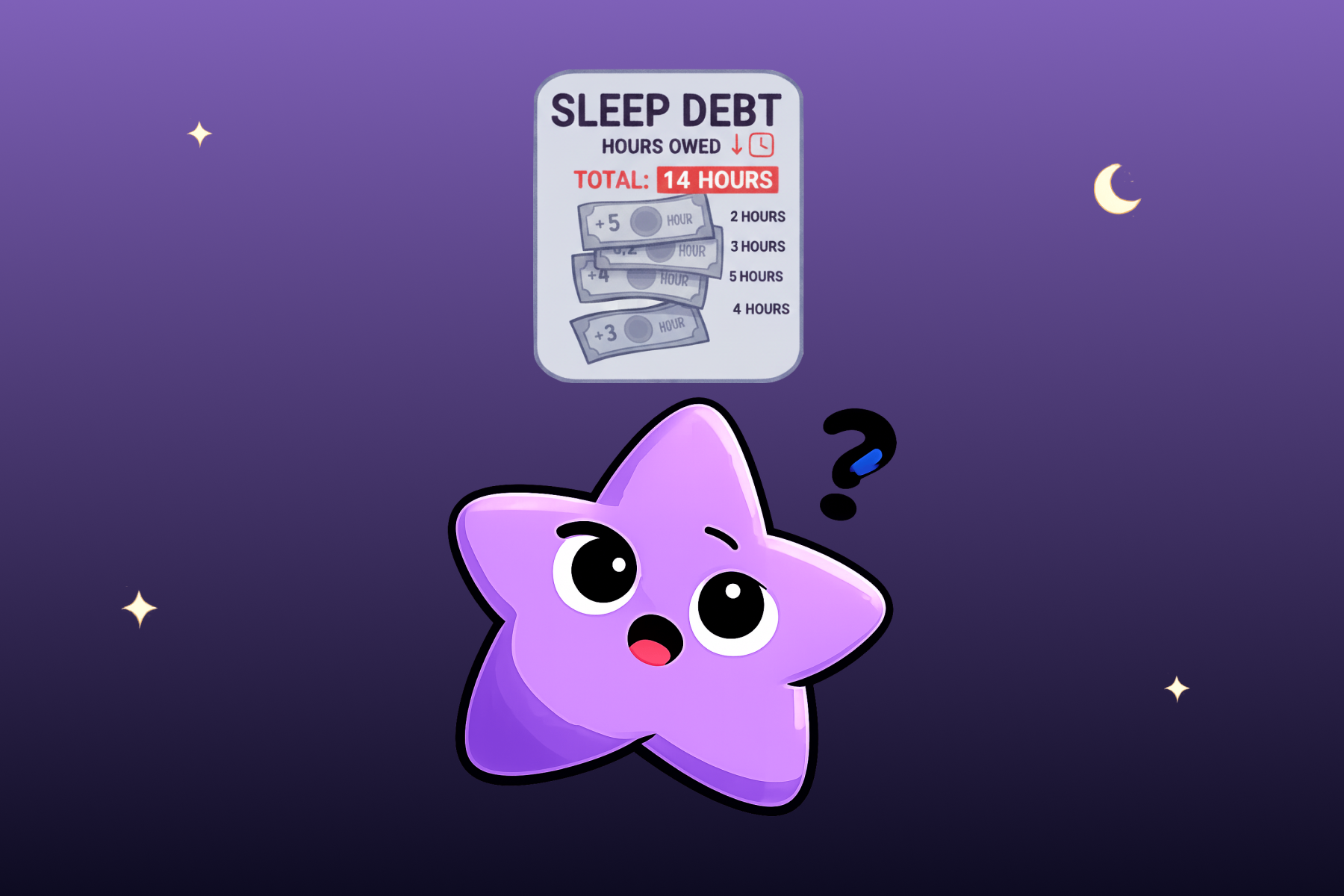
Most of us have sleep debt. We know it on some level, the 11 PM scroll that becomes 1 AM, the alarm we snooze twice, the afternoon slump we blame on lunch. But debt stays abstract until you put a number on it. Once you do, it changes things.
Here's what sleep debt actually is, what it's quietly costing you, and honestly what it takes to get out of it.
what is sleep debt?
Sleep debt is the cumulative difference between the sleep your body needs and the sleep it actually gets.
It's not a metaphor. It's a measurable physiological state. Sleep researchers define it as the accumulation of "owed" sleep resulting from inadequate rest over multiple days and the body keeps meticulous records.
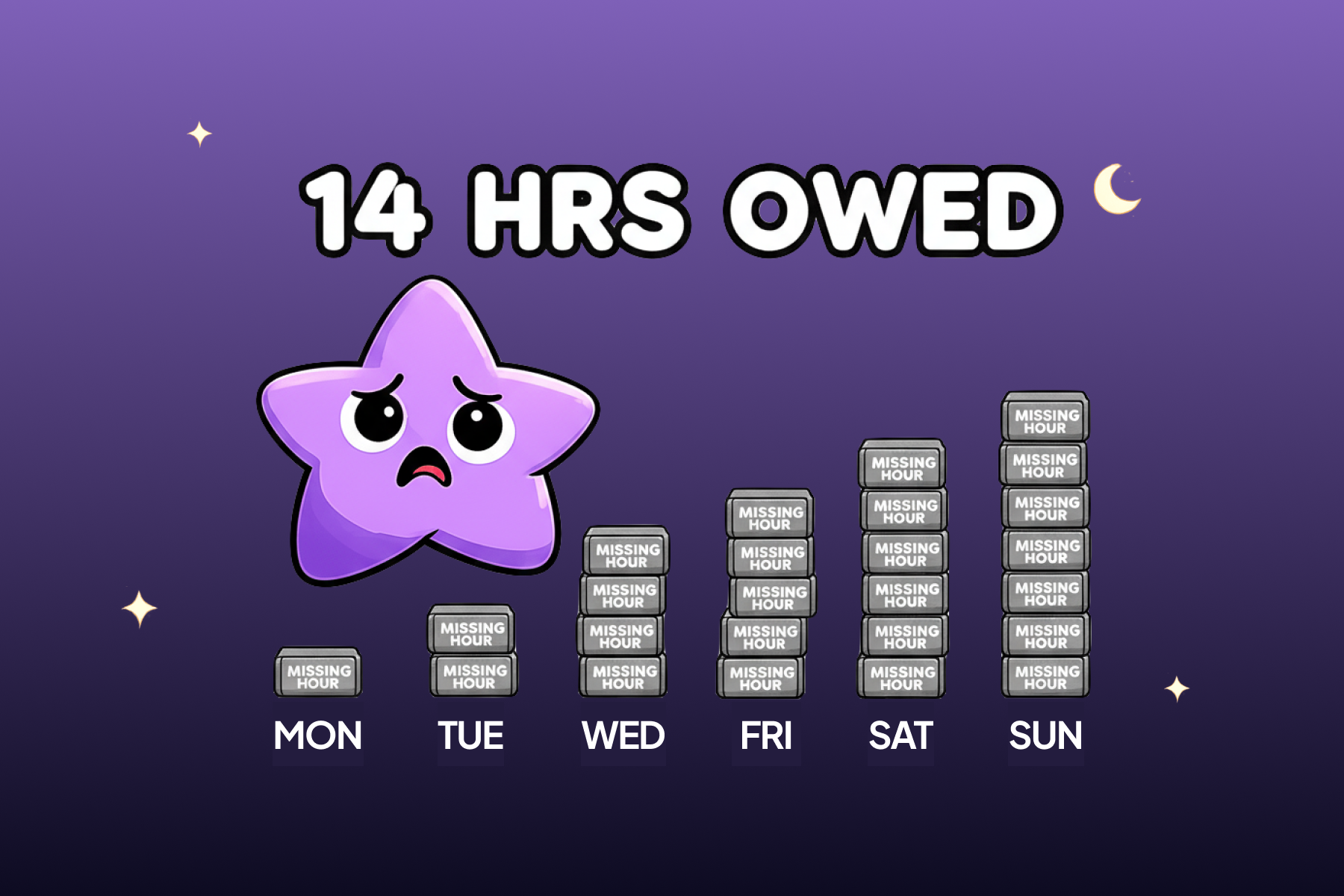
Most adults need 7–9 hours a night. Every night you fall short, the deficit carries forward. Two hours short on Monday, ninety minutes short on Tuesday, by Thursday you're operating on a cognitive overdraft you can't feel but everyone around you can probably see.
The University of Pennsylvania ran one of the most cited experiments in sleep science: participants who slept just 6 hours a night for two weeks performed as poorly on cognitive tests as people who'd been awake for 24 hours straight. The alarming part? They didn't feel that impaired. The brain adapts to exhaustion by losing the ability to accurately judge its own exhaustion.
You don't know how bad it is because sleep debt steals the very faculties you'd use to notice it.
how to calculate your sleep debt
The maths is straightforward. Pick your sleep need: 8 hours works for most adults. Find your actual average over the past 7 nights. The gap, multiplied by 7, is your weekly sleep debt.
If you averaged 6 hours a night this week, you're carrying a 14-hour debt. That's nearly two full nights of lost recovery - compounded, sitting in your cognitive overdraft.
The number is easier to understand when it's personalised.
→ try the lumi sleep debt calculator - takes 90 seconds
14 hours is hard to hold in your head. What it means in practice: the reaction time, the mood, the immune function lands differently when you see it mapped to your actual week.
what sleep debt is actually costing you
This is the part most sleep articles soften. They shouldn't.
cognitively, sustained attention degrades in a dose-dependent relationship with sleep loss (Van Dongen et al., 2003). The more debt you carry, the worse it gets - and the less you notice. Performance on psychomotor tasks worsens progressively with no plateau across days of restricted sleep. Two weeks at 6 hours a night is cognitively equivalent to two full nights without sleep.
emotionally, the amygdala - the brain's threat detector - becomes up to 60% more reactive after sleep deprivation (Yoo et al., 2007). Things that normally slide off you don't anymore. Arguments that would have been minor feel major. The irritability isn't a personality trait. It's a sleep invoice.
physically, immune suppression begins after a single night under 6 hours (Prather et al., 2015, published in Sleep). People sleeping fewer than 6 hours were four times more likely to catch a cold when exposed to the rhinovirus compared to those getting 7 or more.
metabolically, ghrelin - the hunger hormone - rises under sleep deprivation while leptin, which signals satiety, falls. You eat more and feel less full. The cravings aren't willpower failures. They're chemistry.
The data is consistent across decades of research. None of it is catastrophising. It's what a body under chronic sleep restriction looks like from the inside.
can you actually pay it back?
This is where most articles either scare you or oversimplify. The honest answer: it depends on how long you've been in debt.
short-term debt (1–3 poor nights): largely recoverable. Two to three nights of adequate sleep returns most people to baseline alertness and cognitive performance. This is the debt you accumulate over a stressful week, real but manageable.
chronic debt (weeks or months of short sleep): significantly harder. A Jagiellonian University study tracked adults through 10 days of partial sleep deprivation followed by 7 full recovery nights. After those 7 nights, only one cognitive measure - reaction time - had returned to normal. Memory, accuracy, and mental processing had not.
Research from UCSF confirms the same direction: the neurobehavioural consequences of chronic partial sleep deprivation don't reverse quickly. Some deficits may persist for weeks after sleep normalises.
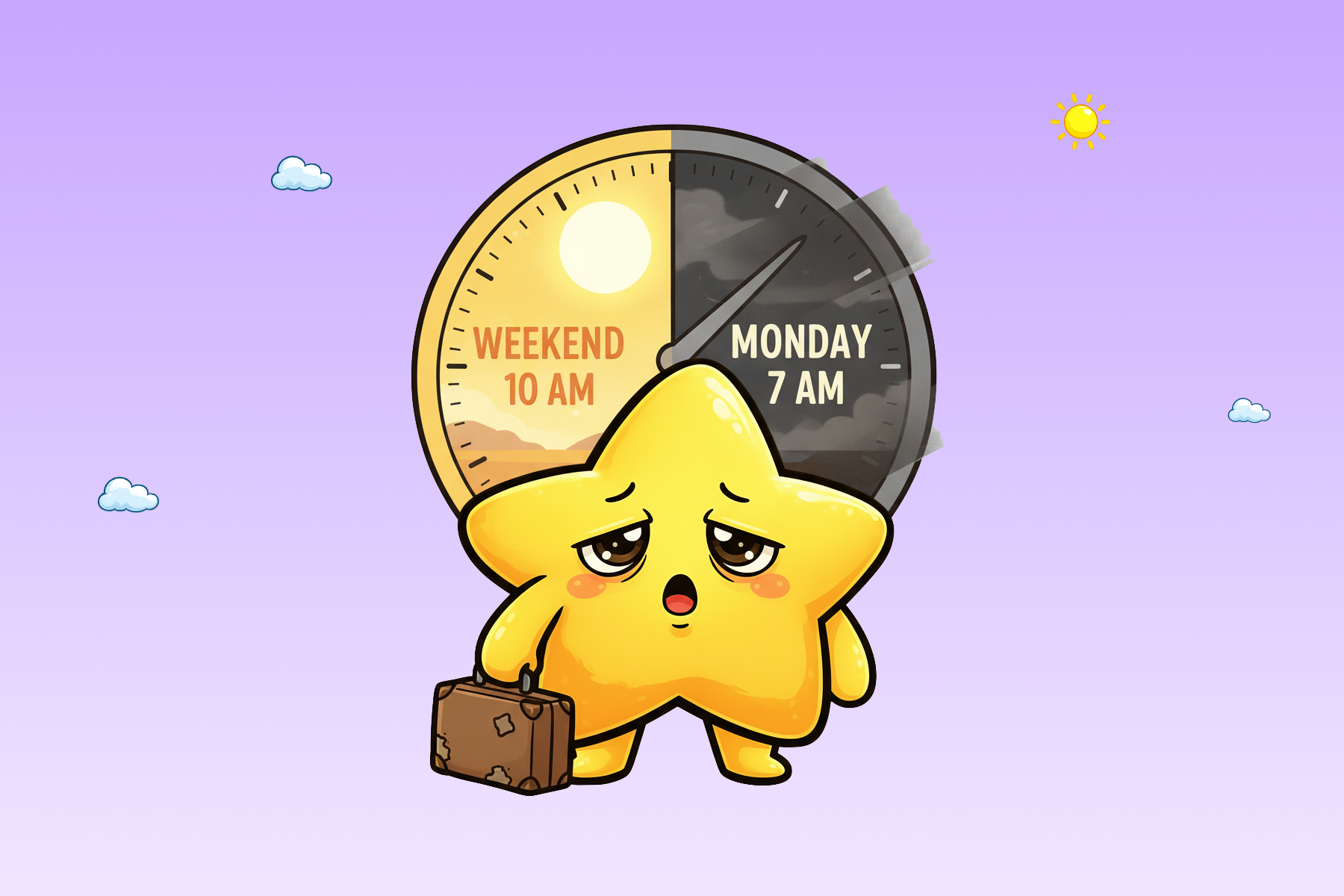
the weekend catch-up myth: a 2019 University of Colorado study found that weekend recovery sleep improved some metabolic markers - it's not nothing. But it doesn't erase the week. And it disrupts your circadian rhythm enough to create a separate problem: social jet lag that makes Monday feel even harder.
The inconvenient summary: short-term debt is payable. Chronic debt requires weeks of consistent recovery, not a lie-in on Saturday. And both require stopping the accumulation first.
where most sleep debt actually comes from
Here's the part the research sometimes skirts around: most sleep debt isn't caused by insomnia. It's caused by chosen late-night screen use.
The American Academy of Sleep Medicine found that 46% of 18–24 year olds report sleeping worse because of pre-bed phone use. That's not a sleep disorder. That's a behavioural pattern deliberate bedtime delay, night after night, adding to a debt that compounds like interest.
The phone isn't the villain in some abstract sense. It's specifically engineered to be the most interesting thing available at the exact moment your willpower is at its lowest. 11 PM is not when most people have their best self-control. It's when the algorithm has the clearest run at keeping you online.
Sleep debt, for most people, is downstream of this one pattern. Fix the night. Stop the accumulation. Recovery becomes possible.
lumi locks the apps that eat your sleep at bedtime - automatically, not as a reminder - so the accumulation stops. The bedtime lock removes the choice before the moment arrives.