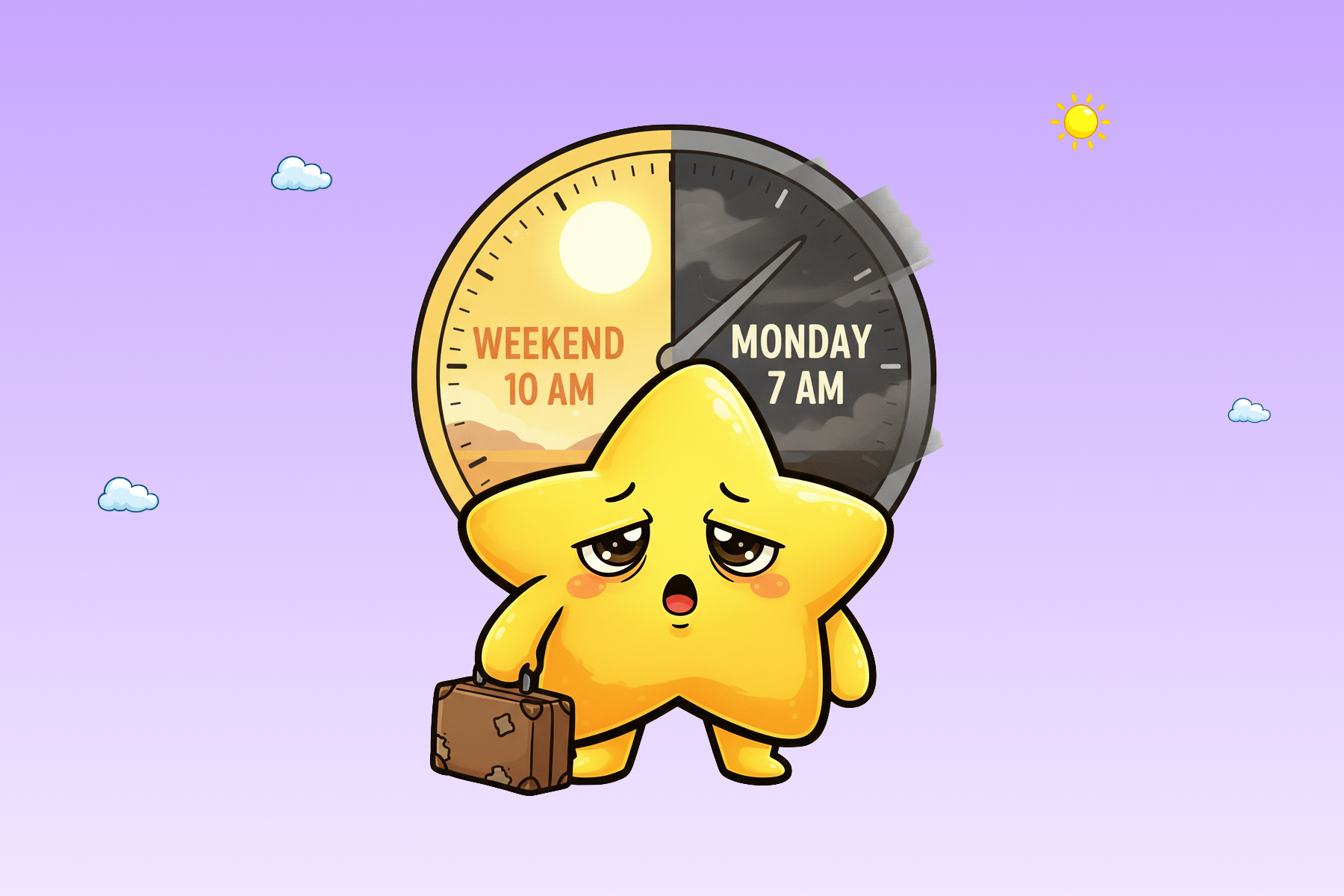
Monday morning hits differently. Not because Monday is harder than other days: the work is roughly the same. It's because your body thinks it's 10 AM when your alarm says 7.
This isn't a motivation problem. It's a biology problem with a name: social jet lag.
Understanding what it is and specifically what your phone is doing to make it worse every weekend is the fastest way to stop feeling wrecked at the start of every week.
what social jet lag actually means
Social jet lag is the mismatch between your body's natural sleep-wake timing and the schedule your work or school obligations require.
The term was coined by chronobiologist Till Roenneberg and colleagues (Wittmann et al., 2006), and it describes something most people experience without a name for it. Research has found that around 70% of students and workers experience at least one hour of social jet lag, and nearly half experience two hours or more.
Here's the mechanism: your circadian rhythm: the internal biological clock regulating when you feel sleepy and when you feel alert naturally shifts later when external time pressures relax. You stay up until 1 AM on Friday. Saturday you sleep until 10. Sunday, same. Your circadian rhythm begins to adjust toward your natural, uncoerced schedule.
Then Monday arrives. Your alarm fires at 7 AM. Your body is still biologically in Friday-night mode. You're not tired because the weekend was hard, you're jet-lagged from it.
The symptom profile is recognisable: brain fog in the first hours of the morning, difficulty concentrating before lunch, emotional reactivity, impaired working memory. If you experience this every single Monday, it's not a personal weakness. It's a documented biological state with a clinical name.
your phone is amplifying it every weekend
Social jet lag would exist without smartphones. It's a structural mismatch between biological clocks and social schedules that predates screens. But your phone actively makes it worse through two specific mechanisms.
mechanism 1: screen light delays your circadian timing.
Your circadian rhythm is regulated primarily by light exposure. Blue-spectrum light in the evening signals your brain that it's still daytime, suppressing melatonin and delaying the onset of sleep chemistry. Research has found that evening light exposure shortens melatonin production by approximately 90 minutes.
On weeknights, you may have some external discipline: a work start time that creates backwards pressure on sleep. On weekends, those constraints relax. Late-night scrolling becomes the default, and each night of it pushes your circadian rhythm a little later. By Sunday, your biological clock has shifted - and Monday morning requires a forced override of that shift.
mechanism 2: infinite scroll removes natural stopping cues.
Weeknight sleep has a boundary: you need to be functional by a specific time. That external pressure, imperfect as it is, creates a rough endpoint. Weekends remove it. Social media removes it further. A TikTok session at 11 PM on Friday has no natural end state, the feed is infinite and the algorithm is optimised to keep you in it.
The combination of removed external pressure and active melatonin suppression from screen light produces weekend circadian drift. That drift is Monday's exhaustion.
how to actually fix social jet lag
The research is consistent: gradual, structural change outperforms willpower-based schedule shifts.
shift your weekend bedtime in small increments
Don't try to force a Friday bedtime that matches your Monday. Shift it 15 minutes earlier each weekend. If you naturally fall asleep at 1:30 AM on weekends, target 1:15 AM this week. Then 1 AM. The gradual approach preserves some of the recovery value of weekend sleep while slowly aligning your circadian rhythm with the week ahead.
Aggressive "I'll just sleep at 10 PM on Sunday" plans almost never work - your circadian clock isn't ready, you lie awake, and the resulting anxiety makes everything worse.
cap your weekend morning sleep-ins
Sleeping until 11 AM on Saturday is pleasant but expensive. That late wake time anchors your circadian clock in place, making Sunday's earlier sleep physiologically impossible and Monday's 7 AM alarm brutal. Research on circadian recovery suggests keeping weekend wake times within about 1 to 1.5 hours of your weekday time. So if you wake at 7 AM on weekdays, try to wake by 8:30 AM on weekends. You still get extra sleep. You don't shift your clock past the point of no return.
use light deliberately on monday morning
Bright light immediately after waking on Monday is one of the fastest levers for circadian reset. Open blinds immediately, go outside for 10 minutes, or use a daylight lamp if you wake before sunrise. The light signal tells your brain the day has started and accelerates the suppression of the melatonin still elevated from your weekend schedule.
Conversely, avoid bright light especially blue-spectrum screen light, in the evenings during the week. It delays the very circadian rhythm you're trying to reset.
Keep a Consistent App Lock Time - Including Weekends
This is the structural fix. The most reliable lever for preventing weekend circadian drift is keeping a consistent bedtime for your apps - including on Fridays and Saturdays.
lumi lets you set the same bedtime lock every night, or configure a slightly later weekend time if you want a little flexibility. The key is that the lock removes infinite scroll as an option before your circadian rhythm has drifted too far. You don't need to be in bed at 10:30 PM on a Friday. You just need TikTok to stop being available at 11.
The difference between going to bed at 11 PM versus 1:30 AM across a weekend is roughly 45 minutes of circadian drift per night. That's the difference between a manageable Monday and a destroyed one.
The Social Jet Lag Checklist
If this pattern is yours, here's where to start this weekend:
- Set a consistent wake time for Saturday and Sunday - within 1.5 hours of your weekday alarm
- Move your weekend phone curfew 30 minutes earlier than usual
- Get outside or open your curtains within 15 minutes of waking on Monday
- Avoid caffeine after 2 PM on Sundays - it will further delay your already-shifted sleep onset
- Use lumi to set the same bedtime lock for weekends (or close to it) as your weekdays
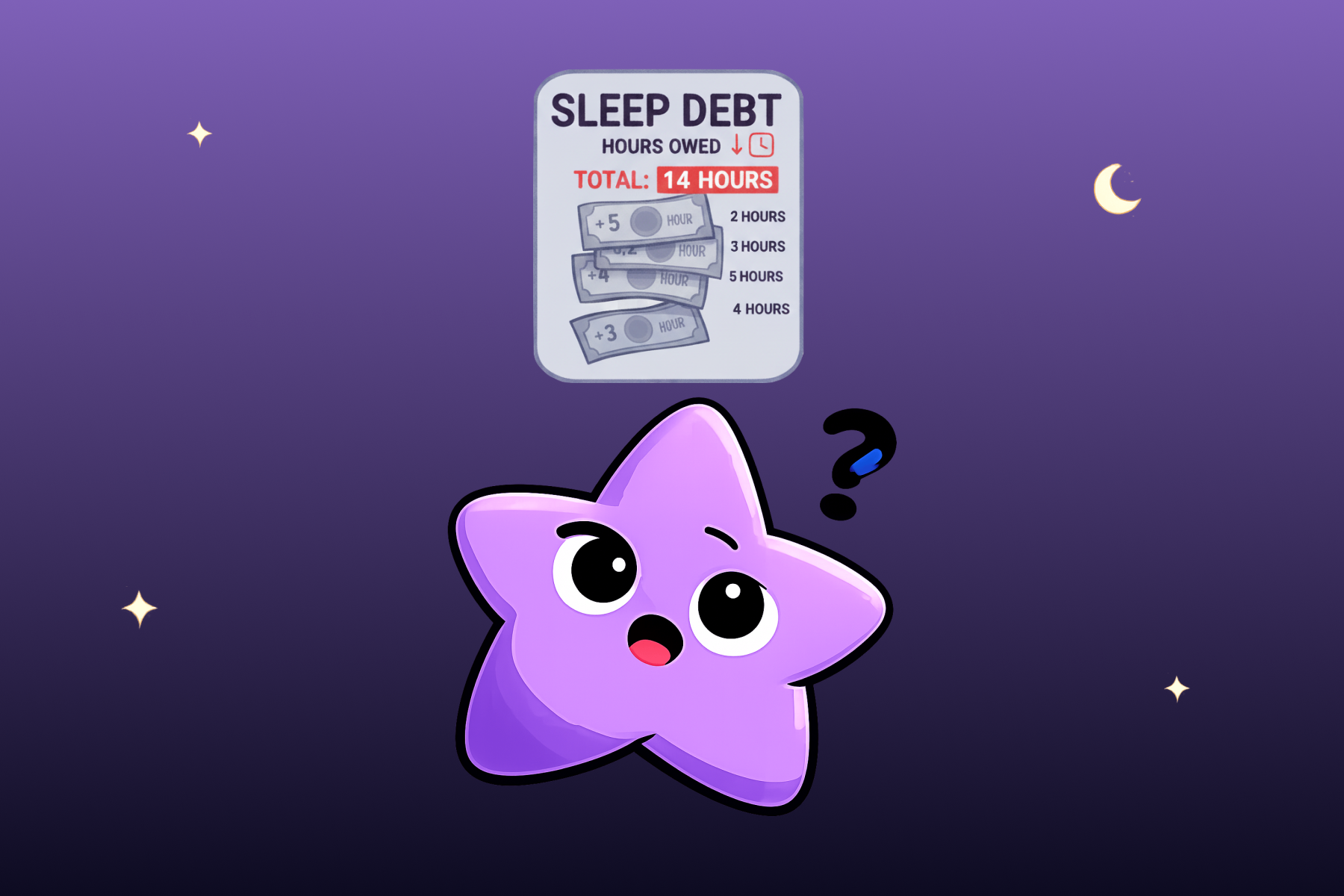
Social jet lag compounds quietly. Each week of weekend drift is another Monday of fog, lower performance, and accumulating sleep debt that the lie-in didn't fully address.
The fix isn't dramatic. It's two things: a consistent wake time, and one structural barrier that stops your phone from shifting your clock in the wrong direction every Friday and Saturday night. The second one is harder to maintain through willpower alone. That's why it works better as a lock than a reminder.